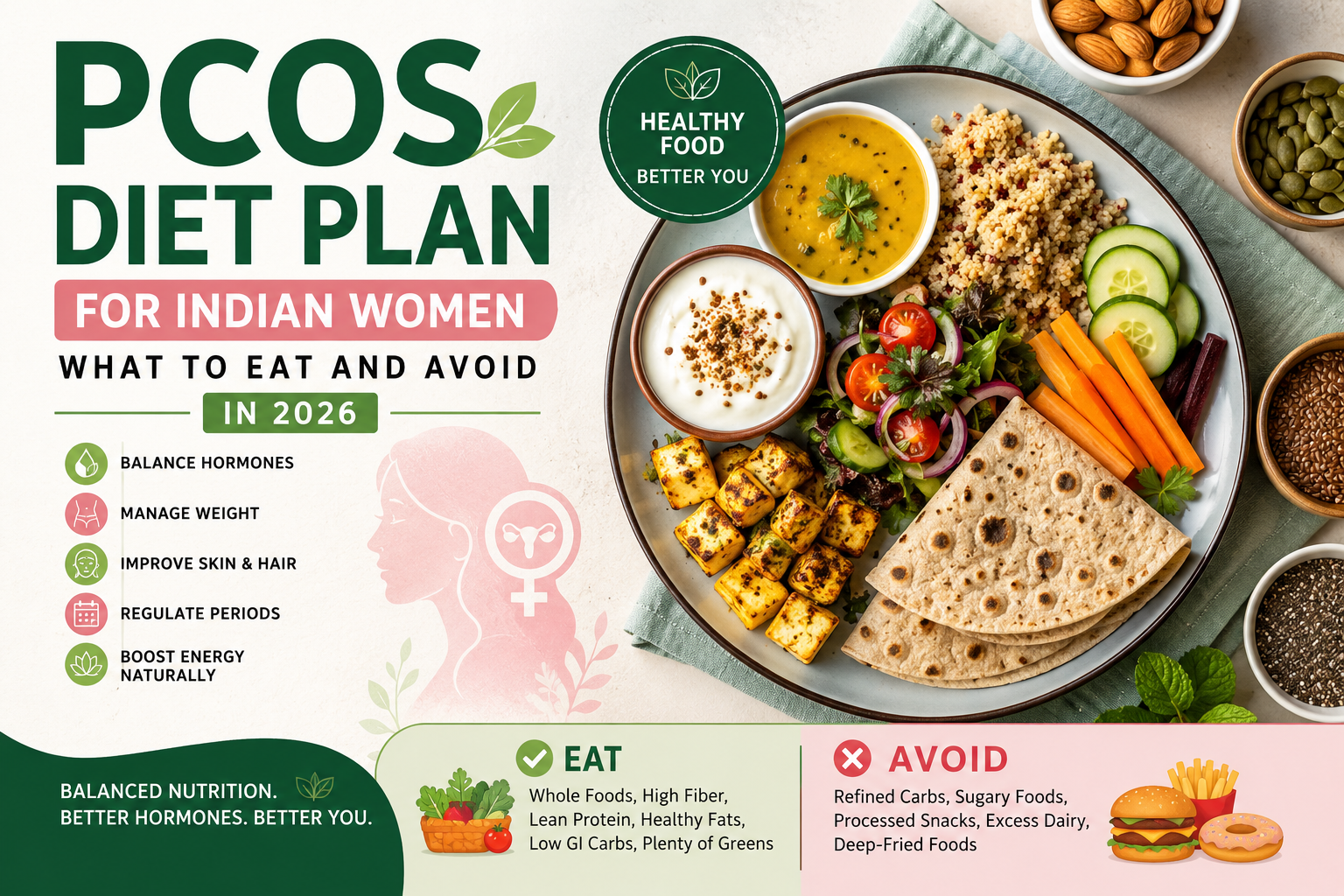
If you’ve recently been told you have PCOS (Polycystic Ovary Syndrome), you’ve probably already heard the standard advice: “eat healthy, lose weight, exercise more.” It’s well-meaning, but it’s also frustratingly vague — and it doesn’t tell you what to actually put on your plate at dinner tonight.Here’s the good news: PCOS affects roughly 1 in 5 Indian women of reproductive age, which means there’s now a huge body of research specifically on how Indian diets — rice, roti, dal, sabzi, and all — can be adjusted to manage it. You don’t need to give up your favourite foods or switch to quinoa salads and almond milk lattes. A well-structured PCOS diet plan for women simply means making smarter swaps within the food culture you already know and love.
In this guide, we’ll break down exactly what to eat, what to limit, and how to build a realistic, sustainable PCOS diet plan using everyday Indian ingredients.
Understanding the PCOS-Diet Connection
Before jumping into food lists, it helps to understand why diet matters so much for PCOS.
For most Indian women, the root driver of PCOS is insulin resistance — a condition where the body’s cells stop responding properly to insulin. To compensate, the pancreas pumps out more and more insulin. The problem is that high insulin levels send a direct signal to the ovaries to produce excess androgens (male hormones like testosterone).
These excess androgens are responsible for many classic PCOS symptoms:
- Irregular or missed periods
- Acne, especially along the jawline
- Excess facial or body hair growth
- Hair thinning on the scalp
- Stubborn weight gain, particularly around the belly
The cycle works like this: high blood sugar → high insulin → high androgens → disrupted ovulation → PCOS symptoms.
The good news? This cycle can be interrupted with food. A diet built around low glycaemic index (low-GI) foods — meaning foods that release sugar slowly into the bloodstream — reduces the insulin spikes that drive this whole process. Even a modest 5–10% reduction in body weight through diet changes has been shown to improve menstrual regularity, lower androgen levels, and support fertility.
Foods to Eat: Building Your PCOS-Friendly Plate
1. Swap Refined Grains for Whole Grains and Millets
White rice, maida-based items (naan, white bread, biscuits, samosas), and refined flour products cause sharp blood sugar spikes. Replace them with:
- Jowar, bajra, ragi, and foxtail millet rotis or porridge
- Brown rice or hand-pounded rice in moderate portions
- Whole wheat or multigrain atta
- Oats (steel-cut or rolled, not instant)
Millets are particularly useful here — they’re naturally gluten-free, fibre-rich, and have a much gentler effect on blood sugar compared to polished rice or maida.
2. Prioritise Protein at Every Meal — Especially Breakfast
Protein slows down digestion, keeps you full longer, and helps stabilise blood sugar. Aim for roughly 25–30g of protein at breakfast specifically — research suggests this can meaningfully reduce androgen levels and improve insulin response throughout the day compared to a carb-heavy breakfast.
Good Indian protein sources include:
- Eggs (poached, boiled, or as a bhurji with vegetables)
- Moong dal chilla, besan chilla, or sprouted moong salad
- Paneer or tofu in moderate amounts
- Greek-style hung curd or regular dahi
- Chicken, fish, or mutton for non-vegetarians
- Soaked almonds, walnuts, and peanuts as snacks
3. Fill Half Your Plate with Non-Starchy Vegetables
Leafy greens (palak, methi, sarson), bottle gourd, ridge gourd, cauliflower, cabbage, beans, capsicum, and bhindi are all low-GI, high-fibre, and packed with micronutrients that support hormonal balance. Aim to make vegetables — not rice or roti — the largest portion on your plate.
4. Choose Healthy Fats Wisely
Healthy fats slow down sugar absorption and support hormone production. Good options include:
- Mustard oil, groundnut oil, or cold-pressed sesame oil for cooking
- A small amount of ghee (1–2 teaspoons daily is generally fine for most women)
- Nuts and seeds — flaxseeds, pumpkin seeds, and chia seeds are especially helpful for hormonal health
- Fatty fish like sardines, mackerel, and salmon for omega-3s (twice a week if non-vegetarian)
5. Embrace Fermented and Probiotic Foods
Gut health and hormonal health are closely linked. Curd (dahi), buttermilk (chaas), idli, dosa batter, and pickled vegetables in moderation can support digestion and reduce inflammation.
6. Add Anti-Inflammatory Spices
Indian kitchens are already stocked with PCOS-friendly spices — use them generously:
- Turmeric (haldi)
- Cinnamon (dalchini) — has been shown to improve insulin sensitivity
- Fenugreek seeds (methi dana) — soak overnight and consume the water
- Ginger and black pepper
Foods to Avoid or Limit
1. Refined Sugar and Sweets
Mithai, packaged biscuits, sugary chai, soft drinks, and desserts cause immediate insulin spikes. This doesn’t mean never having a festival sweet again — it means making sugar an occasional treat, not a daily habit.
2. White Rice, Maida, and Refined Carbs in Excess
These foods digest quickly and spike blood sugar. Reducing portion sizes and pairing them with protein and vegetables can help, but swapping to millets and whole grains most days makes a bigger difference.
3. Deep-Fried and Processed Foods
Samosas, pakoras, namkeen, instant noodles, and packaged snacks often contain refined oils and hidden sugars that worsen both insulin resistance and inflammation. Save these for occasional indulgences rather than daily snacking.
4. Full-Fat Dairy in Large Amounts
This one is nuanced. Full-fat milk, paneer, and excess ghee contain natural hormones that may stimulate androgen production in some women with PCOS. You don’t need to eliminate dairy entirely — but consider switching to low-fat curd and buttermilk as your everyday dairy choices, and treat full-fat milk and paneer as occasional rather than daily foods.
5. Starchy Vegetables in Excess
Potatoes, sweet potatoes, yams (suran), and corn are nutritious but starchy. They’re not “banned,” but eating them in large quantities regularly can cause blood sugar spikes — so think of them as occasional additions rather than everyday staples.
A Sample Day on a PCOS-Friendly Indian Diet
- Early Morning: A glass of warm water with soaked fenugreek seeds
- Breakfast: Two-egg vegetable omelette with a small multigrain roti, or a moong dal chilla with mint chutney
- Mid-Morning Snack: A handful of soaked almonds and walnuts, or a bowl of fruit (apple, guava, or berries)
- Lunch: One bajra or jowar roti, a bowl of dal, a generous serving of non-starchy sabzi, and a small bowl of curd
- Evening Snack: Roasted chana, sprouts salad, or buttermilk
- Dinner: Grilled fish or paneer tikka with a large portion of sautéed vegetables, eaten before 9 PM where possible
Final Thoughts
Managing PCOS through diet isn’t about perfection or extreme restriction — it’s about consistency and small, sustainable shifts. Swapping white rice for millets a few times a week, adding an egg or a bowl of dal to breakfast, and choosing curd over full-fat milk are simple changes that, over weeks and months, can meaningfully improve insulin sensitivity, regulate your cycle, and ease symptoms like acne and excess hair growth.
If you’re just starting out, don’t try to change everything overnight. Pick two or three changes from this guide, build them into your routine for a few weeks, and then add more. Combined with regular movement, good sleep, and stress management, a thoughtful Indian diet can be one of the most powerful tools in your PCOS management toolkit.
This article is for general informational purposes only and is not a substitute for professional medical advice. Please consult a doctor or registered dietitian before making major changes to your diet, especially if you are on medication or planning a pregnancy.
Read the latest blog here
10 Preventive Health Habits That Can Reduce Your Risk of Chronic Diseases