Polycystic Ovary Syndrome (PCOS) is one of the most common hormonal disorders affecting women of reproductive age, yet it remains widely misunderstood and often goes undiagnosed for years. Many women dismiss the early signs of PCOS in women as everyday issues like stress, bad skin days, or simply “being unlucky” with their bodies. Unfortunately, this delay in recognition can lead to long-term complications such as infertility, type 2 diabetes, and heart disease.
The good news? PCOS is highly manageable when caught early. By understanding the warning signals your body sends, you can take proactive steps toward better hormonal health. In this article, we’ll walk through 10 early signs of PCOS in women that should never be ignored, why they happen, and what you can do about them.
What Is PCOS?
PCOS is a hormonal imbalance that affects how the ovaries function. It is characterized by irregular ovulation, elevated levels of androgens (male hormones), and often the presence of multiple small cysts on the ovaries. While the exact cause is still being studied, genetics, insulin resistance, and inflammation are believed to play significant roles.
Because PCOS symptoms often overlap with other conditions, many women go years without a proper diagnosis. That’s why recognizing the early signs of PCOS in women is so important — early intervention can make a huge difference in long-term health outcomes.
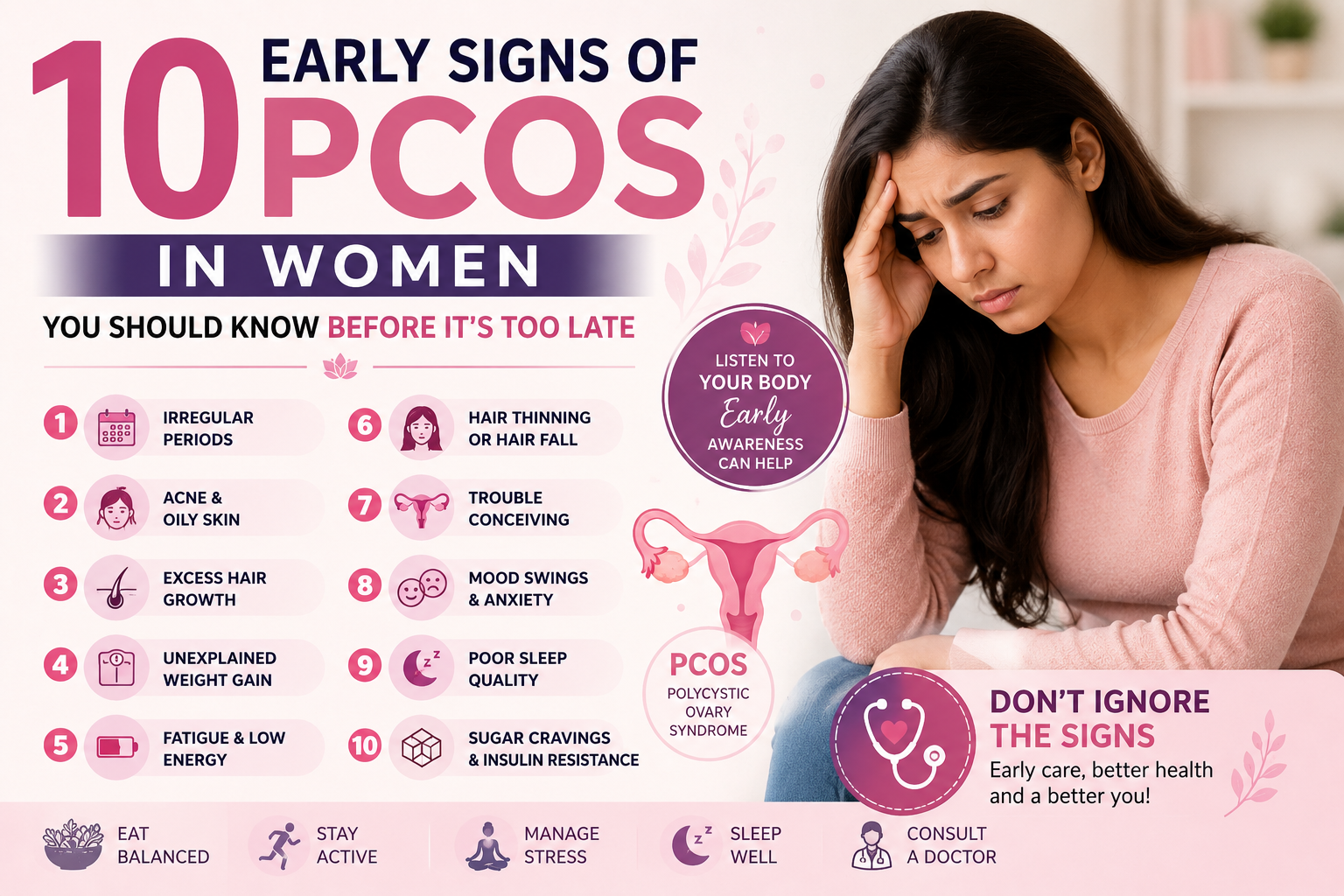
1. Irregular or Missed Periods
One of the earliest and most common signs of PCOS is an irregular menstrual cycle. This could mean periods that come more than 35 days apart, fewer than eight periods a year, or cycles that are unpredictable in length and flow. Irregular periods occur because PCOS disrupts ovulation, preventing the regular hormonal shifts that trigger menstruation.
If you’ve noticed your cycle has become unpredictable over the past several months, it’s worth discussing with a healthcare provider rather than assuming it’s “just stress.”
2. Persistent Acne That Won’t Go Away
While occasional breakouts are normal, persistent hormonal acne — especially along the jawline, chin, and lower cheeks — can be one of the early signs of PCOS in women. This happens because elevated androgen levels stimulate the skin’s oil glands, leading to clogged pores and inflammation.
If your acne seems resistant to typical skincare routines and tends to flare around your cycle, hormonal imbalance could be the underlying cause.
3. Unexplained Weight Gain or Difficulty Losing Weight
Many women with PCOS struggle with weight gain, particularly around the abdomen, even without major changes to diet or activity levels. This is often linked to insulin resistance, a condition common in PCOS where the body’s cells don’t respond efficiently to insulin, causing the body to store more fat.
If you find that weight loss feels disproportionately difficult compared to your efforts, it may be worth getting your hormone and insulin levels checked.
4. Excess Hair Growth (Hirsutism)
Increased hair growth on the face, chin, chest, back, or abdomen is a classic symptom caused by elevated androgen levels. This condition, known as hirsutism, can be one of the more emotionally distressing early signs of PCOS in women, as it often affects self-confidence.
While some hair growth differences are genetic or ethnic in nature, a sudden or significant increase in coarse, dark hair growth in these areas warrants a conversation with your doctor.
5. Thinning Hair or Hair Loss on the Scalp
On the flip side, many women with PCOS experience hair thinning or male-pattern hair loss on the scalp, particularly at the crown. This is also driven by androgen sensitivity in hair follicles. If you’ve noticed more hair in your brush or shower drain than usual, combined with other symptoms on this list, it could point toward a hormonal cause.
6. Dark, Velvety Patches of Skin (Acanthosis Nigricans)
A lesser-known but important sign is the appearance of dark, thickened, velvety patches of skin, often found on the neck, armpits, groin, or under the breasts. This condition, called acanthosis nigricans, is strongly associated with insulin resistance — a hallmark feature of PCOS.
These patches are not just a cosmetic concern; they’re a visible signal that your body may be struggling to regulate blood sugar effectively.
7. Fatigue and Low Energy Levels
Chronic fatigue that doesn’t improve with rest can be linked to the hormonal fluctuations and insulin resistance seen in PCOS. Blood sugar swings throughout the day can leave you feeling drained, foggy, or in need of frequent naps — even after a full night’s sleep.
8. Mood Swings, Anxiety, or Depression
Hormonal imbalances don’t just affect the body — they affect the mind too. Many women with PCOS report increased anxiety, irritability, or symptoms of depression. Research suggests that women with PCOS are at a higher risk of mood disorders, possibly due to the combined effects of hormone fluctuations, insulin resistance, and the emotional toll of dealing with visible symptoms like acne or hair changes.
If you’ve been feeling unusually anxious or low and can’t pinpoint why, it’s worth considering whether hormonal health could be a contributing factor.
9. Difficulty Getting Pregnant
PCOS is one of the leading causes of infertility in women, primarily because it disrupts regular ovulation. For many women, difficulty conceiving is actually the first sign that leads to a PCOS diagnosis — often after months or years of trying without success.
If you’ve been trying to conceive for six months to a year without success, especially alongside irregular cycles, it’s important to speak with a fertility specialist or gynecologist.
10. Sleep Problems and Sleep Apnea
Women with PCOS are at a higher risk of developing sleep apnea — a condition where breathing repeatedly stops and starts during sleep. This is often linked to weight gain and hormonal changes associated with PCOS. Poor sleep quality can, in turn, worsen insulin resistance and weight gain, creating a frustrating cycle.
If you snore heavily, wake up gasping, or feel unrefreshed despite sleeping for 7-8 hours, it may be worth getting evaluated for sleep apnea alongside other PCOS symptoms.
Why Early Detection Matters
Recognizing the early signs of PCOS in women isn’t about creating unnecessary worry — it’s about empowerment. The earlier PCOS is identified, the sooner you can begin lifestyle adjustments, dietary changes, or medical treatments that help manage symptoms and reduce the risk of long-term complications like type 2 diabetes, cardiovascular disease, and endometrial issues.
What to Do If You Notice These Signs
- Track your symptoms – Keep a journal of your menstrual cycle, skin changes, weight fluctuations, and energy levels for a few months.
- Consult a gynecologist or endocrinologist – A simple blood test and pelvic ultrasound can help determine if PCOS is the underlying cause.
- Focus on lifestyle changes – A balanced diet low in refined sugars, regular physical activity, and stress management can significantly improve symptoms.
- Don’t self-diagnose or self-medicate – While online research is a great starting point, only a healthcare professional can provide an accurate diagnosis and treatment plan.
Final Thoughts
PCOS is far more common than many people realize, affecting an estimated 1 in 10 women of reproductive age worldwide. Yet because its symptoms can be subtle, gradual, or mistaken for other issues, countless women go undiagnosed for years. By learning to recognize the early signs of PCOS in women — from irregular periods and stubborn acne to unexplained fatigue and fertility struggles — you give yourself the best chance at early intervention and long-term wellness.
If any of these signs sound familiar, don’t wait. A simple conversation with your doctor today could make all the difference for your health tomorrow.
Disclaimer: This article is for informational purposes only and is not a substitute for professional medical advice, diagnosis, or treatment. Always consult a qualified healthcare provider regarding any health concerns.
Read the latest blog here
PCOS Diet Plan for Women: What to Eat and Avoid in 2026