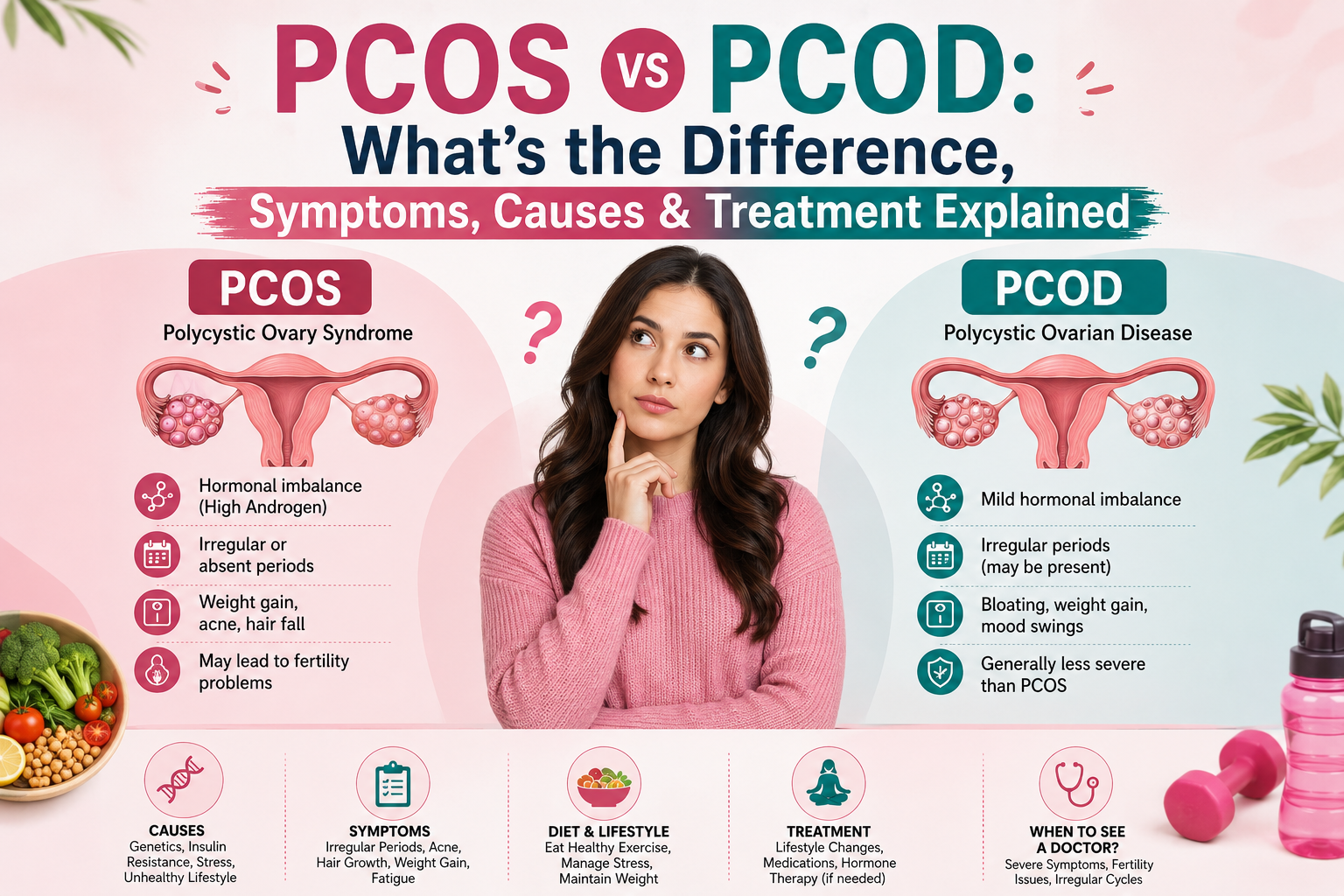
If you’ve ever been told you might have PCOS or PCOD and walked away more confused than before, you’re not alone. These two terms are often used interchangeably, even by people who should know better, but they actually describe two distinct conditions with different severity, causes, and long-term implications. Understanding the difference between PCOS and PCOD is the first step toward getting the right diagnosis and treatment plan, rather than relying on mismatched information found online.
This guide breaks down both conditions in plain language, covering what sets them apart, the symptoms to watch for, what causes each one, and how they’re typically treated.
What Is PCOD?
PCOD stands for Polycystic Ovarian Disease. It occurs when the ovaries release immature or partially mature eggs, which eventually turn into cysts due to a hormonal imbalance, primarily involving excess androgen and insulin levels. PCOD is considered a fairly common condition, and many cases respond well to lifestyle changes such as improved diet, regular exercise, and weight management. In most cases, PCOD does not severely affect fertility, and many women with the condition are still able to conceive with appropriate management.
What Is PCOS?
PCOS, or Polycystic Ovary Syndrome, is a more complex metabolic and endocrine disorder. It’s not just about the ovaries, it involves a broader hormonal imbalance that can affect insulin resistance, metabolism, and overall reproductive function. With PCOS, the ovaries may produce excess androgens, which can interfere with ovulation altogether rather than just producing immature eggs. Because PCOS is classified as a syndrome rather than a disease, it tends to involve a wider range of symptoms and can have more significant long-term health implications if left unmanaged.
Difference between PCOS and PCOD
The simplest way to understand the difference is this: PCOD is primarily an ovarian issue, while PCOS is a broader hormonal and metabolic syndrome that happens to involve the ovaries as one of several affected systems. PCOD is generally considered less severe and more manageable through lifestyle adjustments alone. PCOS, on the other hand, often requires a combination of medical treatment and long-term lifestyle management because of its association with insulin resistance, weight gain, and a higher risk of conditions like type 2 diabetes and cardiovascular issues later in life.
Another key distinction lies in fertility outcomes. Women with PCOD usually retain a higher chance of natural conception, since ovulation, while irregular, often still occurs. With PCOS, ovulation can be absent more frequently, which is why fertility treatments are more commonly required for women trying to conceive with this condition.
Symptoms of PCOD
Common symptoms of PCOD include irregular or missed periods, mild to moderate weight gain, pelvic discomfort, and the development of small cysts visible on an ultrasound. Many women with PCOD also experience some hair thinning or acne, though these tend to be milder compared to PCOS. Mood fluctuations are also commonly reported, often linked to the hormonal shifts associated with the condition.
Symptoms of PCOS
PCOS symptoms tend to be more pronounced and varied. These often include irregular or absent periods, significant weight gain, particularly around the abdomen, and excessive hair growth on the face, chest, or back, a condition known as hirsutism. Acne that’s resistant to typical treatments, thinning hair on the scalp, and dark patches of skin around the neck or armpits, a sign of insulin resistance, are also common. Many women with PCOS also experience difficulty losing weight despite consistent diet and exercise efforts, which is tied to the underlying insulin resistance that often accompanies the condition.
What Causes PCOD and PCOS?
Both conditions share overlapping causes, which is part of why they’re often confused. Hormonal imbalance is central to both, particularly elevated androgen levels and irregular insulin function. Genetics also play a meaningful role, women with a family history of either condition are at higher risk. Lifestyle factors, including poor diet, lack of physical activity, high stress levels, and disrupted sleep patterns, can contribute to or worsen both conditions.
The key difference lies in severity and underlying mechanism. PCOD is more closely tied to ovarian dysfunction triggered by lifestyle and hormonal factors, while PCOS involves a deeper metabolic dysfunction that often requires more comprehensive intervention to manage effectively.
How Are PCOD and PCOS Diagnosed?
Diagnosis for both conditions typically involves a combination of a physical examination, blood tests to check hormone levels including androgens, insulin, and thyroid function, and a pelvic ultrasound to check for cysts on the ovaries. For PCOS specifically, doctors often use the Rotterdam criteria, which requires at least two of three features: irregular ovulation, elevated androgen levels, and polycystic ovaries visible on imaging. This is part of why PCOS diagnosis can take longer and involve more thorough testing compared to PCOD.
Treatment Options for PCOD
PCOD is generally managed through lifestyle modifications as the first line of treatment. This includes adopting a balanced diet low in refined sugars and processed foods, incorporating regular physical activity, and maintaining a healthy weight. In some cases, doctors may prescribe hormonal birth control to regulate menstrual cycles or other medications to manage specific symptoms like acne or excess hair growth. Most women see significant improvement in symptoms once sustainable lifestyle changes are in place.
Treatment Options for PCOS
Because PCOS involves a broader metabolic component, treatment is usually more multifaceted. Lifestyle changes remain foundational, but they’re often paired with medication. Doctors frequently prescribe insulin-sensitizing medications like metformin to address insulin resistance, hormonal treatments to regulate cycles, and in some cases, fertility medications for women trying to conceive. Long-term management also focuses on monitoring for associated risks such as type 2 diabetes, high cholesterol, and cardiovascular disease, since PCOS is linked to higher risk in these areas over time.
Can PCOD or PCOS Be Cured?
Neither condition has a definitive cure, but both can be effectively managed. PCOD often improves significantly, and in some cases symptoms may resolve almost entirely, with sustained lifestyle changes. PCOS is typically a lifelong condition that requires ongoing management rather than a one-time fix, though many women lead healthy, symptom-controlled lives with the right combination of medical care and lifestyle habits.
When to See a Doctor
If you’re experiencing irregular periods, unexplained weight changes, excessive hair growth, persistent acne, or difficulty conceiving, it’s worth consulting a gynecologist or endocrinologist for proper evaluation. Early diagnosis, whether it turns out to be PCOD or PCOS, makes management considerably easier and can help prevent longer-term complications.
Final Thoughts
While PCOS and PCOD are often used as if they mean the same thing, understanding the difference between PCOS and PCOD matters because it directly affects how each condition is treated and what long-term risks to watch for. PCOD tends to be a more localized, manageable ovarian condition, while PCOS is a broader metabolic syndrome that requires more comprehensive, often lifelong management. If you suspect you have either condition, the most important step is getting a proper diagnosis from a qualified healthcare provider rather than self-diagnosing based on symptoms alone.
Frequently Asked Questions
Is PCOD more dangerous than PCOS? No, generally it’s the opposite. PCOS is considered more serious due to its broader metabolic effects and links to diabetes and heart disease risk.
Can I have both PCOD and PCOS? Since PCOD is sometimes considered a milder subset within the PCOS spectrum, the terms can overlap, which is why proper diagnosis from a doctor is important.
Does losing weight help with PCOS or PCOD? Yes, even modest weight loss can improve hormone balance, restore ovulation, and reduce symptoms in both conditions.
This article is for informational purposes only and is not a substitute for professional medical advice. Please consult a qualified doctor for diagnosis and treatment specific to your situation.
Read the latest blog here
Healthy Weight Gain Diet Plan for indian Men and Women in 2026