India witnesses extremely high temperatures during the summer season. Many Indian cities experience temperatures exceeding 45 degrees Celsius, causing health problems for residents. Extremely hot weather can lead to a number of health conditions, such as dehydration, dizziness, exhaustion, headaches, and sometimes even heatstroke. This makes it imperative to learn heatwave safety tips in India
Certain groups of people are more vulnerable to health hazards during heatwaves, including children, senior citizens, outdoor workers, and individuals with chronic diseases. Nonetheless, by adopting certain practices, one can ensure one’s own and one’s family’s safety during extremely hot weather.
In this post we have some tips to prevent this heat wave.
Definition of Heatwave
A heatwave refers to a period characterized by extremely high temperatures that persists for a few days. When heatwaves occur, there is increased loss of water through sweating in the body, hence causing dehydration and other heat-related ailments.
Heatwaves generally occur in India from April to June if enough precautions are not observed.
Some of the common symptoms related to extreme heat include:
- sweating
- dizziness
- fatigue
- headaches
- cramps
- dry mouth
- nausea
Dangerous Effects of Heatwaves
Heat is an additional burden for the body. In case the body fails to cool down, various diseases may occur.
The consequences of heatwaves include:
- dehydration
- low blood pressure
- heat exhaustion
- heatstroke
- tiredness and weakness
Those people who work for many hours under the direct sunlight are more prone to them.
How to Protect Yourself from Heatwave
Here are some simple and effective ways to stay safe during extreme summer heat.
Water, Water Everywhere
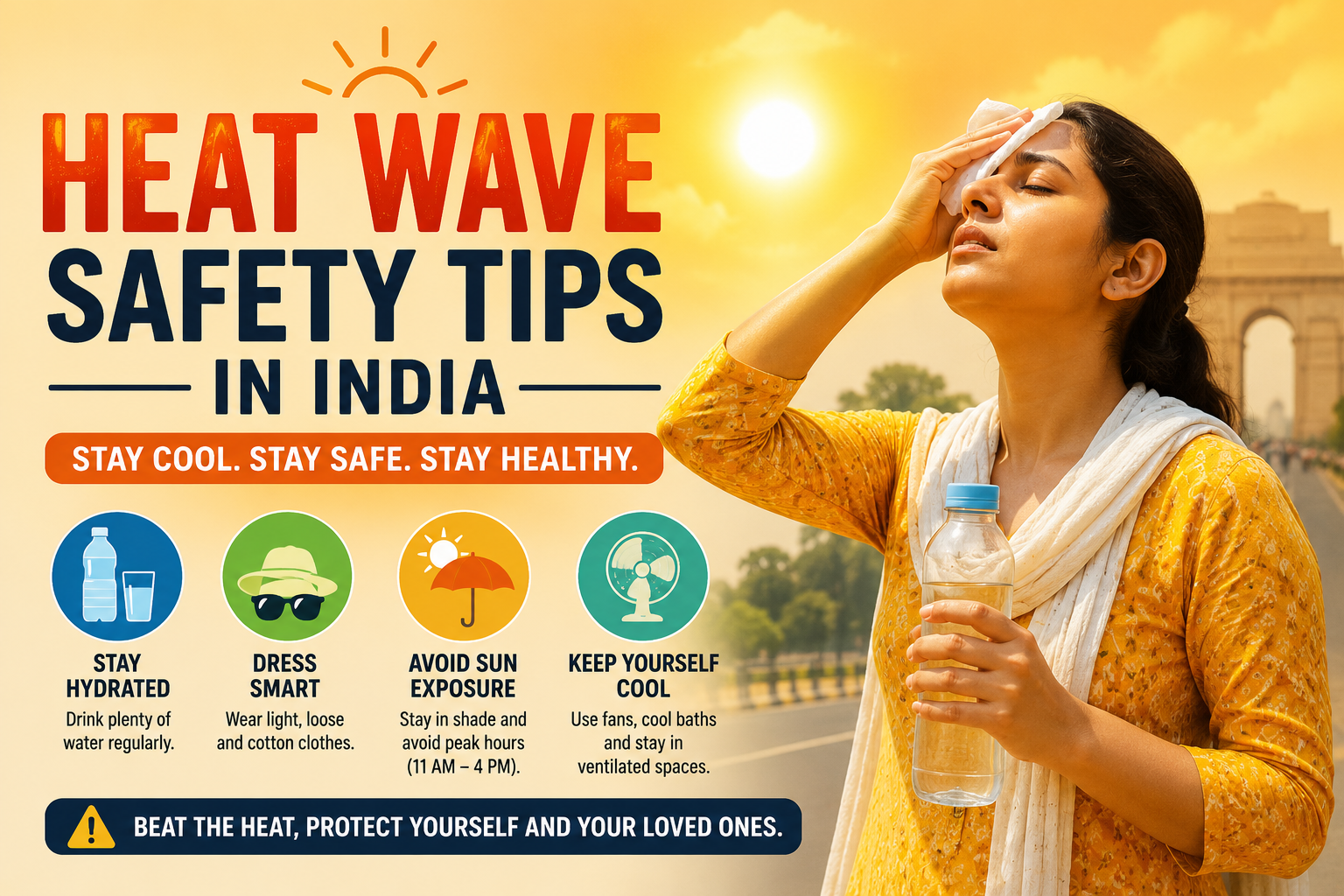
One of the best ways to keep yourself safe during the heat wave is hydration.
In summers, your body gets dehydrated because of excessive sweating. Even if you are not feeling thirsty, make sure you take water at regular intervals during the day.
Try to consume the following:
- 2.5 to 3 liters of water per day
- Coconut water
- Lemon water
- Buttermilk or chaas
- ORS if required
- Do not drink too much:
- Soft drinks
- Caffeine
- Alcohol
2. Do Not Go Outdoors During Peak Heat Time Periods
The hottest part of the day occurs between noon and 4 p.m.
To avoid the risk of developing heat exhaustion, one should:
remain indoors during this time
avoid sun exposure
finish outdoor activities during cooler parts of the day
However, in case one has to go outdoors, then he/she should use the following:
umbrella
sunglasses
head covering like a hat or a scarf
3. Wear Light Clothing
Your clothing choices affect how you feel during hot weather.
Wear:
- loose-fitting clothes made of cotton
- light-colored clothing
- breathable materials
- Don’t wear:
- tight clothing
- dark-colored clothes
- synthetic material clothing
- Light-colored clothes help air flow around your body and keep it cool.
4. Have Light and Nutritious Food
Consuming heavy and greasy food can make you tired during summer.
In this situation, I prefer having the following:
- fruits
- salads
- curd
- vegetables
- light home-cooked food
- The best food for summer is
- watermelon
- cucumber
- muskmelon
- coconut water
- curd rice
- Avoid eating too many oily and spicy foods during extreme summers.
5. Keep Your Home Cool
Even indoors, during a heat wave, temperature levels can be extremely high.
How to stay cool indoors:
Draw curtains during the day
Use fans/coolers
Open windows in the evening
Avoid excess heat due to appliances
Try to spend time in shaded/cooler places during the peak heat periods.
6. Do Not Overlook Symptoms of Dehydration
Dehydration is a condition that many people ignore until it is too late.
Symptoms of dehydration include:
Dry mouth
- Headaches
- Fatigue
- Dizziness
- Dark yellow urine
- Lack of energy
- If you have any of the above symptoms, do the following:
- Drink plenty of water
- Stay in cool place
- Avoid exposure to the sun
7. Look After Kids and the Elderly
- Children and elderly people are more prone to extreme heat.
- Ensure that they:
- consume sufficient fluids
- remain indoors when temperature is high
- do not get physically tired
- dress in cool attire
- Children and pets should never be left in cars when it is hot in summer.
8. Refrain From Intense Physical Exercise in Extreme Heat
- Intense physical activity in direct sun exposure causes quick overheating of the body.
- In case of a heat wave, you should:
- refrain from exercises in the afternoon
- take walks in the morning and evening
- keep taking breaks from time to time
- consume plenty of water prior and after workouts
- Workers who work outdoors should take rests under shade.
9. Apply Sunscreen Before Going Outdoors
Exposure to strong sunshine during the summertime may harm the skin.
Before stepping out, apply:
- sunscreen
- sunglasses
- umbrella or scarf
Some Simple Safety Tips During Heatwave Days - Some small practices that help during hot days include:
- Carry a bottle of water all the time
- Eat plenty of watery fruits
- Avoid going outside without any reason
- Make your room well-ventilated
- Wear cotton clothes
- Take enough rest
Don’t allow yourself to dehydrate
Such small practices may prove helpful during summer days.
Some Frequently Asked Questions About Heatwave
Which is the most efficient method to safeguard ourselves during heatwaves?
The safest thing to do is to remain hydrated, avoid sunlight exposure, wear light-colored dresses, and stay indoors when the temperature is extremely high.
What amount of water intake is recommended during summer days?
It’s better for an adult person to consume about 2.5 – 3 liters of water daily.
Which foods can be consumed during a heatwave period?
Such foods should have a higher content of water, like cucumber, watermelon, curd, coconut water, and fruits.
What are the symptoms of heat exhaustion?
Dizziness, excessive sweating, headache, weakness, and dehydration are common early signs.
Conclusion
There is an increase in heatwaves in India. These safety measures ensure that your body is protected against harsh heat conditions during summer. Drinking plenty of water, taking balanced meals, protecting yourself from direct sunshine, and ensuring proper rest will ensure you maintain good health.
With these heatwave safety measures, you will be able to enjoy healthy life activities without being worried about heat waves.
Read more blog articles here:
Summer diet plan for weight loss •