Fatty liver disease is often called a “silent” condition, and for good reason — it can develop quietly for years before causing any noticeable trouble. But recognizing fatty liver symptoms in women early can make a real difference in preventing the condition from progressing to more serious liver damage, such as inflammation, fibrosis, or cirrhosis.
Today, the condition once widely known as non-alcoholic fatty liver disease (NAFLD) is increasingly referred to by doctors as MASLD (metabolic dysfunction-associated steatotic liver disease), reflecting its strong link to insulin resistance, obesity, and metabolic syndrome. While fatty liver disease affects both men and women, hormonal shifts, menopause, and conditions like polycystic ovary syndrome (PCOS) can make women particularly vulnerable — and can sometimes mask or alter how symptoms show up.
Below, we break down why fatty liver disease shows up differently in women, the 10 early warning signs to watch for, and when it’s time to talk to a doctor.
Why Fatty Liver Affects Women Differently
Before menopause, estrogen offers some natural protection against fat accumulation in the liver. Once estrogen levels drop, that protective effect fades, which is part of why fatty liver disease risk rises sharply in postmenopausal women. Other female-specific risk factors include PCOS, gestational diabetes, and rapid weight changes during or after pregnancy. Because of this hormonal backdrop, fatty liver symptoms in women can sometimes overlap with — and get mistaken for — menopause symptoms, thyroid issues, or stress, which is exactly why awareness matters.
10 Early Warning Signs of Fatty Liver in Women
1. Persistent Fatigue
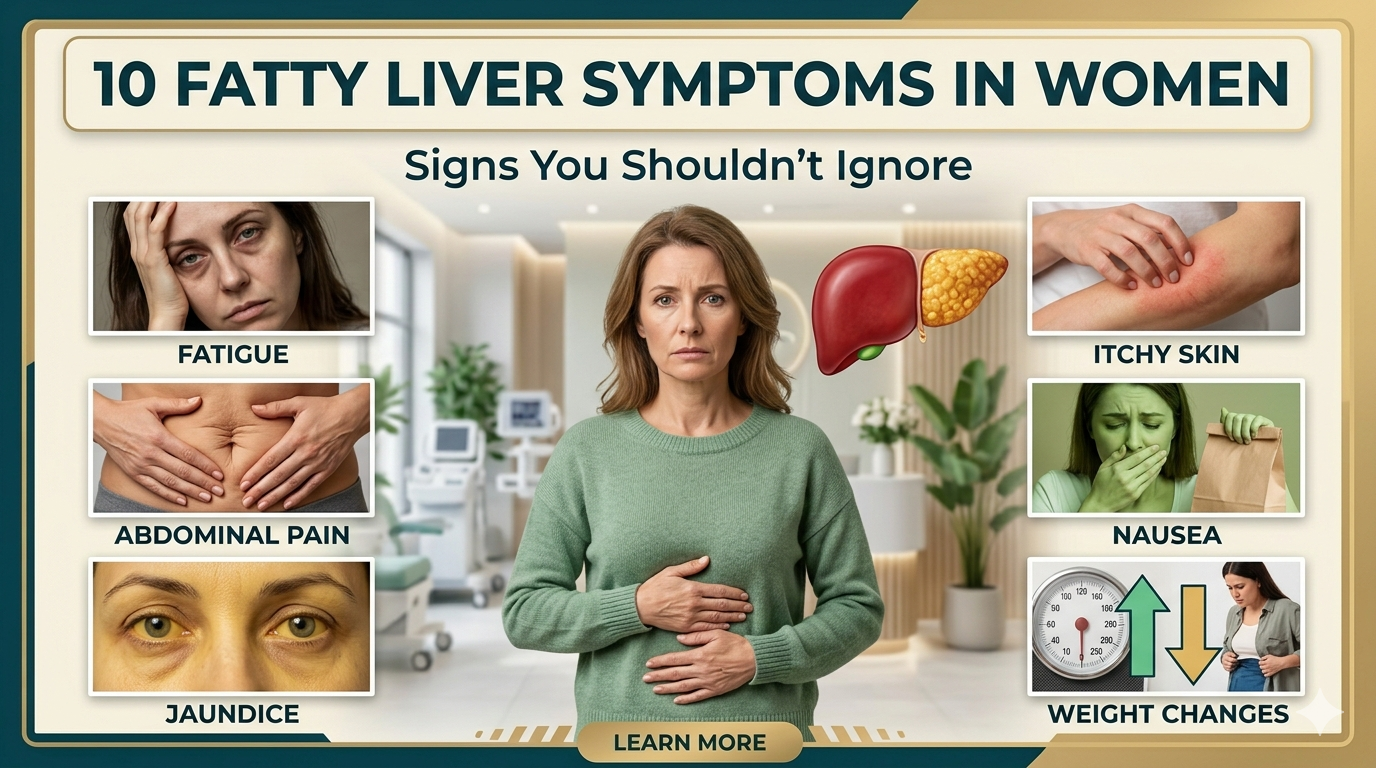
Unexplained, ongoing tiredness that doesn’t improve with rest is one of the most commonly reported fatty liver symptoms in women. As fat builds up in liver cells, the organ’s ability to process energy efficiently declines, leaving many women feeling drained even after a full night’s sleep.
2. Discomfort or Dull Pain in the Upper Right Abdomen
A feeling of fullness, pressure, or mild aching just under the right ribcage can signal an enlarged liver. This discomfort is often subtle at first and may be mistaken for digestive upset or muscle strain.
3. Unexplained Weight Gain, Especially Around the Belly
Stubborn abdominal weight gain — particularly visceral fat around the midsection — is closely tied to fatty liver disease. This pattern of weight gain is also linked to insulin resistance, which both contributes to and results from liver fat buildup.
4. Skin Changes, Including Darkened Patches
Acanthosis nigricans — dark, velvety patches of skin on the neck, armpits, or skin folds — can be an early clue of insulin resistance and is frequently seen alongside fatty liver disease in women, especially those with PCOS.
5. Persistent Itchy Skin
Itching without a visible rash, sometimes worse at night, can occur when bile acids build up due to impaired liver function. While more common in advanced liver disease, some women notice this symptom earlier than expected.
6. Loss of Appetite or Mild Nausea
A reduced interest in food, occasional queasiness, or feeling unusually full after small meals can point to a liver that’s struggling to process fats and toxins efficiently.
7. Brain Fog and Difficulty Concentrating
Trouble focusing, forgetfulness, or a general mental “fuzziness” may be linked to mild hepatic dysfunction. This symptom is easy to dismiss but is increasingly recognized as part of the broader picture of fatty liver symptoms in women.
8. Irregular Periods or Worsening PCOS Symptoms
Because insulin resistance, hormonal imbalance, and liver fat accumulation are closely interconnected, women with fatty liver disease often notice irregular menstrual cycles or a flare-up of PCOS-related symptoms like excess hair growth or acne.
9. Elevated Liver Enzymes on Routine Bloodwork
Many women discover early fatty liver disease not through obvious symptoms, but through a routine blood test showing mildly elevated ALT or AST liver enzymes. This is one of the most reliable early indicators, even before physical symptoms appear.
10. Swelling in the Legs or Ankles
As fatty liver disease progresses, fluid retention can cause noticeable swelling (edema) in the lower legs and ankles. While this typically signals a more advanced stage, it’s an important sign that shouldn’t be ignored.
When to See a Doctor
Because many fatty liver symptoms in women are mild, nonspecific, or easy to attribute to other causes, the condition is frequently missed until a routine checkup uncovers it. If you notice a combination of the signs above — particularly fatigue, abdominal discomfort, skin changes, or abnormal bloodwork — it’s worth asking your doctor about liver function tests, an abdominal ultrasound, or a FibroScan to assess liver fat and stiffness.
Women with PCOS, type 2 diabetes, obesity, high cholesterol, or a family history of liver disease should be especially proactive about screening, even without obvious symptoms.
Supporting Liver Health: Practical Next Steps
The encouraging news is that early-stage fatty liver disease is often reversible with lifestyle changes. Gradual, sustainable weight loss, reducing added sugars and refined carbohydrates, increasing fiber and protein intake, staying physically active, limiting alcohol, and managing underlying conditions like diabetes or high cholesterol can all meaningfully reduce liver fat over time.
Final Thoughts
Recognizing fatty liver symptoms in women early gives you the best chance to reverse the condition before it progresses. Because the signs can be subtle and easy to overlook, paying attention to fatigue, abdominal discomfort, skin changes, and routine bloodwork is key. If any of these warning signs sound familiar, don’t wait — schedule a conversation with your healthcare provider to discuss screening options.
This article is for informational purposes only and is not a substitute for professional medical advice, diagnosis, or treatment. Please consult a qualified healthcare provider regarding any symptoms or health concerns.
Read the latest blog here
What are the causes of thyroid problems in young women?