Introduction
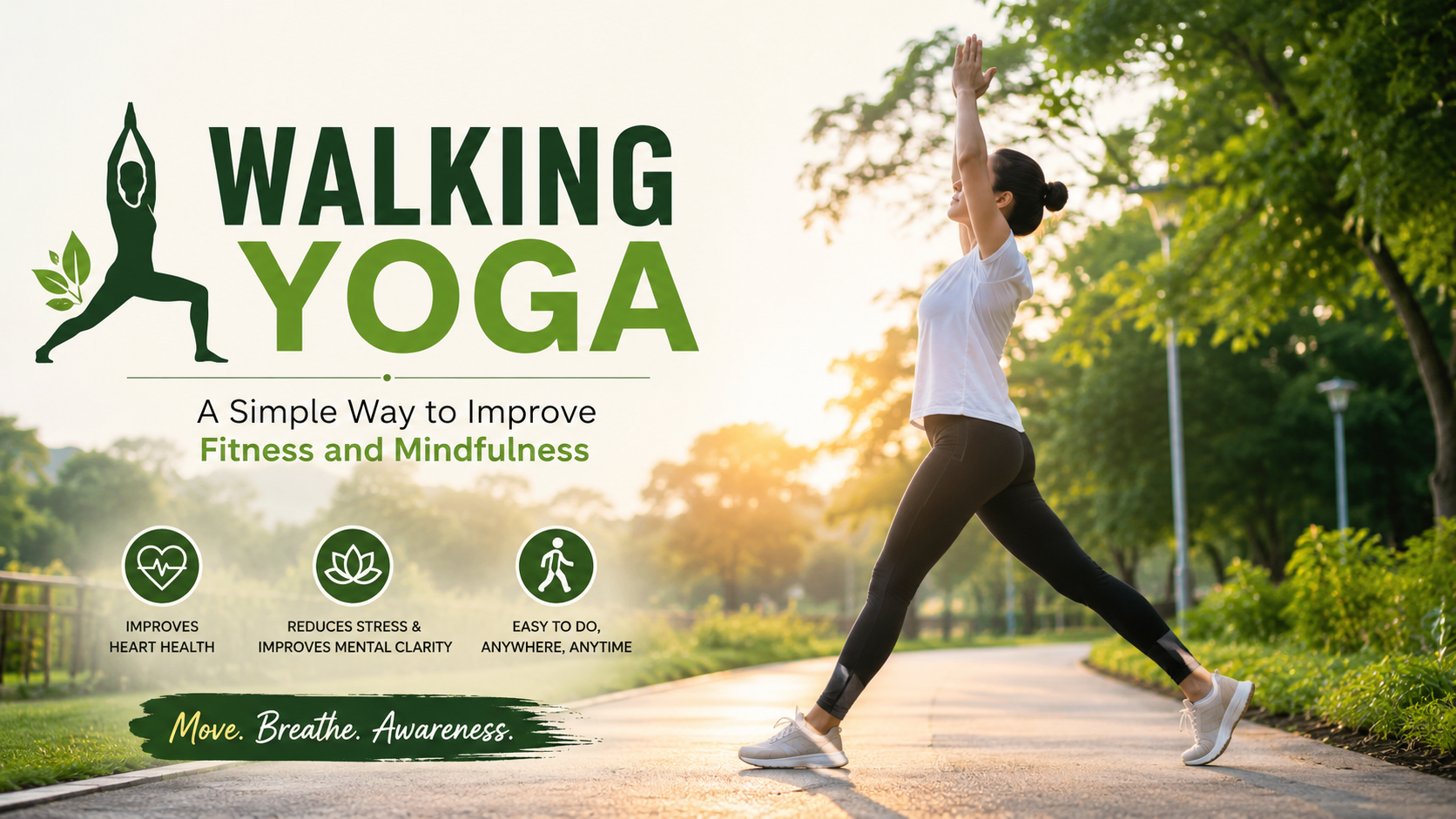
Imagine yourself engaging in a daily walk in the morning that would not only improve your health and mood but also help you do yoga without a mat, without attending a gym, and with zero prior knowledge?This practice of walking yoga is becoming more and more popular across the globe; the search interest in it has risen to 2,400 percent since 2024, making it one of the biggest trends of 2026. Regardless of age or gender, people are falling in love with combining two of the most popular and convenient practices of the world.
This article will provide an insight into what walking yoga is, how it helps you, the science behind it, and how to conduct your first ever practice of walking yoga.
What Is Walking Yoga?
As the name suggests, walking yoga is a kind of yoga practice which entails doing yoga through the act of walking.
Instead of practicing yoga on a mat in a studio, here you go out into nature and practice yoga walking. This means that as you take a stroll, you consciously connect breathing with your steps, hold the correct posture and stop from time to time to do yoga stretches in standing position such as the Mountain pose, Warrior II, Tree pose, and even Standing Forward Fold.
It can be seen as taking the usual walk up a notch as opposed to doing yoga on the sidewalk.
What a regular session of walking yoga will entail?
- Start with 5 minutes of slow, mindful breathing as you begin your walk
- Sync your breath with your steps (inhale for 4 steps, exhale for 4)
- Every 10–15 minutes, pause at a bench or open space for 2–3 standing yoga poses
- Resume walking with continued breath and body awareness
- End with a standing cool-down stretch
No special equipment. No studio membership. No yoga pants required (though they help!).
Why Is Walking Yoga Trending in 2026?
In addition, there is a more significant change taking place in the fitness industry, and walking yoga is at its epicenter.
With intense training regimens having become the norm in most gyms and social media, many are burning out, which means that the focus in the 2026 fitness industry has shifted towards smarter movements that will keep people going without exhausting them in the process. The idea behind the trend in 2026 is to exercise in such a way that would be beneficial and enjoyable for people in the long run.
That is where walking yoga comes into play because it is gentle and easy enough for everyone, including beginners, older adults, and individuals recovering from injuries but also challenging enough to keep active yoga enthusiasts busy when time is tight. In addition, walking yoga is convenient for those who cannot spare 60 minutes for a regular yoga class due to various reasons.
It is also worth noting that there is something unique about performing a certain type of exercise outside in the fresh air.
Top 7 Benefits of Walking Yoga
1. Reduces Stress and Anxiety
Walking yoga involves two of the most extensively studied ways of combating stress – physical activity and mindful breathing. The synchronization of one’s breathing with movement triggers the activation of the parasympathetic nervous system responsible for “rest and digest”, thus lowering levels of cortisol and reducing anxiety. Scientific research proves that yoga as well as walking on their own lower stress hormones.
2. Improves Cardiovascular Health
A consistent walking yoga practice gets your heart pumping at a moderate, sustainable intensity. This improves circulation, lowers blood pressure over time, and supports long-term heart health — without the joint stress of running or intense cardio workouts.
3. Boosts Flexibility and Mobility
The yoga poses practiced while walking – lunges, forward bends, hip stretches, and shoulder rotations – slowly stretch out your body and enhance mobility. With time, you will find that your hips, hamstrings, back, and shoulders become more flexible, which will alleviate stiffness and aches.
4. Improves Balance and Posture
Postures such as tree pose and warrior III postures are some of the poses that you engage in during the walk. These particular poses will challenge your balance and core strength. On the other hand, maintaining mindful postures will keep your spine aligned at all times thereby minimizing back pain.
5. Enhances Mental Clarity and Focus
Walking Yoga, therefore, is simply mindfulness in motion. This is because by concentrating on breathing, the body, and the environment, as opposed to your cell phone or even an audio book, your mind becomes trained to concentrate and stay in the present moment. Participants have found that walking yoga leaves one rejuvenated and more productive for many hours afterward.
6. Supports Weight Management
While walking yoga is not a high-calorie-burn workout, its real value for weight management lies in consistency. Because it feels good and requires no equipment or preparation, people actually stick with it. Regular, moderate movement done consistently is far more effective for long-term weight management than intense workouts done sporadically.
7. Accessible for All Ages and Fitness Levels
This might be walking yoga’s greatest superpower: anyone can do it. You don’t need to be flexible. You don’t need prior yoga experience. You don’t need to be young or fit. If you can walk and gently stretch, you can practice walking yoga. It’s especially valuable for seniors looking for safe, low-impact movement, and for beginners who find traditional yoga studios intimidating.
How to Start Walking Yoga: A Beginner’s Step-by-Step Guide
Getting started with walking yoga doesn’t require any preparation beyond comfortable shoes and a willingness to slow down and pay attention.
Step 1: Choose Your Route
Pick a safe, pleasant walking route — a local park, a quiet street, or a nature trail. Outdoors is ideal, but a treadmill works too if that’s what you have access to.
Step 2: Begin With Breath Awareness
Before you take your first step, stand still for a moment. Take 3 deep belly breaths — inhale through your nose, exhale through your mouth. Feel your feet on the ground. Set an intention for your practice.
Step 3: Walk Mindfully
Start walking at a comfortable, unhurried pace. Begin syncing your breath to your steps: inhale for 4 steps, exhale for 4 steps. If that feels too rigid, just focus on breathing deeply and naturally as you walk. Keep your gaze soft, your shoulders relaxed, and your spine upright.
Step 4: Add Standing Yoga Poses
Every 10–15 minutes, find a flat, stable spot and pause for 2–3 yoga poses. Great beginner options include:
- Mountain Pose (Tadasana): Stand tall, feet hip-width apart, arms at your sides. Breathe deeply for 5 counts. Focus on alignment.
- Tree Pose (Vrikshasana): Shift your weight to one foot, place the other foot on your ankle or inner calf. Hold for 5 breaths each side.
- Standing Forward Fold: Feet hip-width apart, hinge from the hips and let your upper body hang toward the ground. Hold for 5–8 breaths.
- Crescent Lunge: Step one foot forward, lower the back knee slightly if needed, reach arms overhead. Hold for 5 breaths each side.
- Shoulder and Neck Rolls: Gently roll your shoulders backward 5 times, then slowly tilt your ear to each shoulder.
Step 5: Cool Down and Close
End your session with 5 minutes of slow, quiet walking. Finish with a few minutes of standing stillness — eyes closed, breathing deeply. Acknowledge how your body feels compared to when you started.
Ideal session length: 20–45 minutes, 3–5 times per week.
Common Mistakes to Avoid
- Rushing through the poses: Walking yoga is about slowing down, not squeezing in reps. Let each pose be an actual pause.
- Ignoring your breath: The breath is the backbone of the practice. If you’re not breathing intentionally, you’re just walking with stretch breaks.
- Wearing the wrong shoes: Supportive, flat-soled walking shoes work best. Avoid thick-cushioned running shoes for the pose intervals — you want to feel the ground.
- Being too ambitious too soon: Start with just 2–3 poses per walk. Build gradually over weeks as the habit becomes natural.
Who Should Try Walking Yoga?
Walking yoga is genuinely for everyone, but it’s especially valuable for:
- Beginners who want to try yoga without the intimidation of a class
- Seniors looking for safe, joint-friendly daily movement
- Office workers dealing with back stiffness and mental fatigue
- Anxious or stressed individuals who need a calming, low-effort outlet
- Busy parents who can’t carve out an hour for a gym session
- Runners or athletes looking for an active recovery day option
Final Thoughts
Walking yoga is not a complex fad. It does not entail that you need to invest in some kind of purchase, membership, or skill. All it involves is taking the walk that you might have intended to take anyway and bringing your whole self to it.
Living in a world where people are constantly being told to speed up, work hard, and optimize everything, walking yoga gives you an option that is nothing short of revolutionary: relax, breathe, and walk as if your body counts.
Perhaps this is what explains its widespread adoption by millions of individuals in 2026 and beyond.
But enough of talk. Just put on your walking shoes, get out there, and take a breath. You’ve started your walking yoga practice with one simple step.
Read the latest blog here
Best Morning Drinks for Weight Loss in Women Naturally (That Actually Work)