Summers in India can be very tough, especially during heat waves when temperatures tend to exceed usual limits. During heat waves, if one is exposed to hot temperatures for a long period of time, heat stroke symptoms and prevention tips can prevent from extreme heat. Learning about symptoms of heat stroke as well as some preventive measures will allow one to avoid dangerous complications associated with heat stroke.
Heat stroke is one of the most dangerous consequences of excessive heat. Heat stroke happens when a person’s body temperature control system malfunctions and his/her body temperature rises dramatically. If not treated right away, heat stroke can cause severe damage to one’s organs and become very dangerous.
In this article, we will talk about symptoms of heat stroke, risk groups, prevention techniques, and how to handle heat stroke.
What Is Heat Stroke symptoms and prevention tips?
Heat stroke is a severe condition which happens when the body heats up so high that the body fails to cool down efficiently. It typically cools itself by producing sweat. But sometimes, due to intense heat and extreme activities, the body can fail to regulate its temperature.
It leads to a rise in body temperature above 104°F (40°C). In such situations, the patient needs immediate treatment to avoid life-threatening risks.
Learning about symptoms of heat stroke along with ways to prevent this condition is essential for everyone’s better health.
Symptoms of Heat Stroke
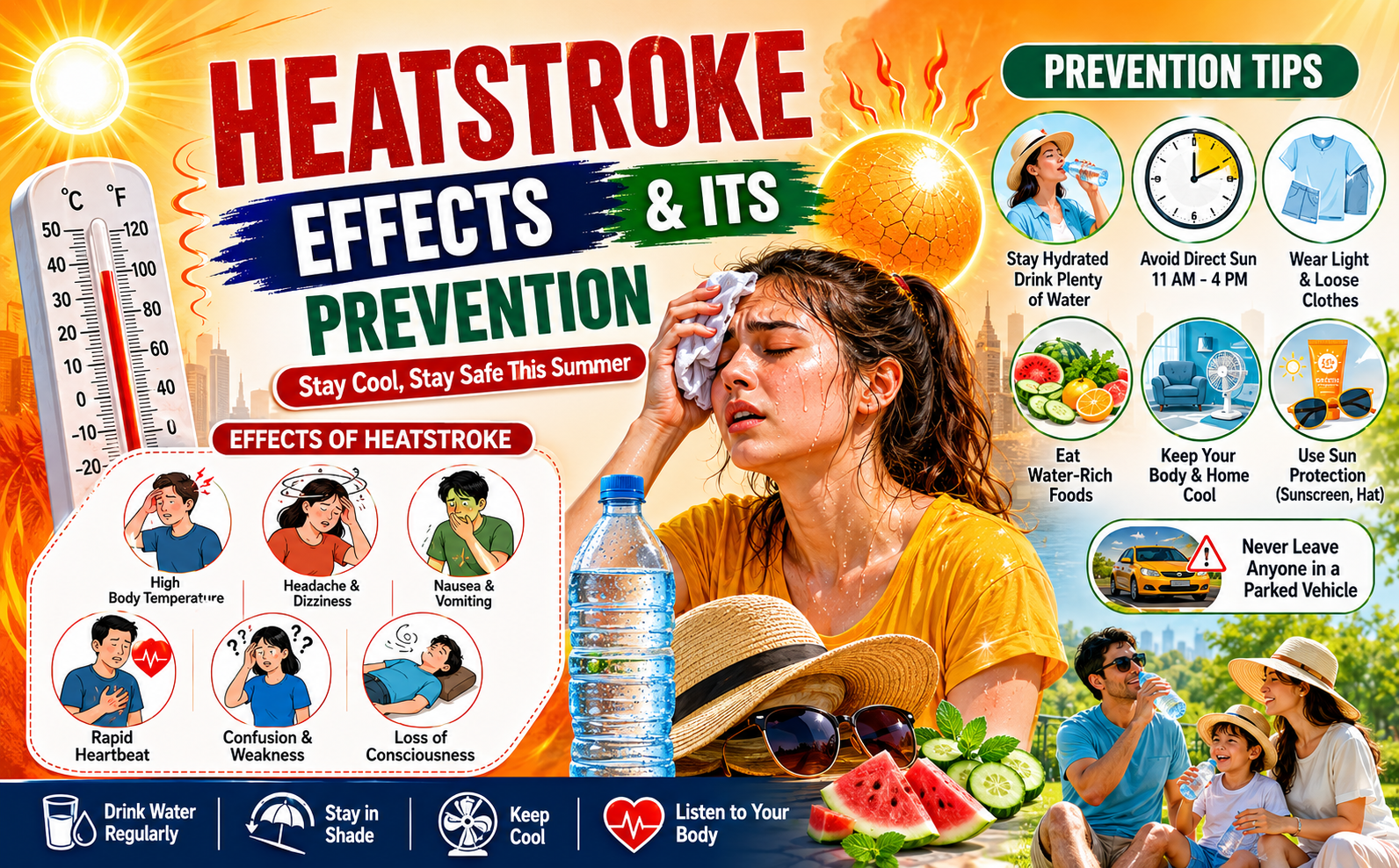
Heat stroke symptoms include several alarming signs that need urgent medical attention. The common symptoms are listed below:
- Extremely Elevated Body Temperature
A rise in body temperature over 104°F (40°C) is among the earliest symptoms of heat stroke.
- Hot and Dry Skin
Sometimes, it makes the skin hot, dry, and red as the body stops sweating effectively.
- Headache
Patients tend to have a sudden and severe headache due to heat stroke.
- Feeling Dizzy and Confused
Headache can make the person dizzy and confused at times.
- Racing Heart
Body temperature increases the workload on heart, making it beat rapidly.
- Stomach Ailments
Some people feel nauseous or throw up because of heat stroke.
7. Muscle Weakness or Cramps
Dehydration may cause muscle weakness and cramps.
- Loss of Consciousness
In the most extreme situations, an individual can faint or become unconscious.
None of these danger signals should ever be disregarded, particularly when the weather becomes dangerously hot.
Who Is Prone to Heat Stroke?
While heat stroke can happen to anyone, some people are more susceptible to it than others:
- Older adults
- Babies and children
- Outdoors workers
- Athletes
- People with certain health problems
- Medication users
- Those who have dehydration problems
Knowing the risk factors associated with heat stroke is a crucial part of understanding its symptoms and prevention tips.
Causes of Heat Stroke
There are many causes of heat stroke which include:
- Prolonged Exposure to High Temperatures
- Sitting outside for a long period during heat waves will be highly risky.
- Dehydration
- Not having enough water supply makes the body less capable of cooling through sweating.
- Intense Physical Activity
- Doing exercises or other physical activities in hot weather raises the body temperature too fast.
- Wearing Heavy Clothing
- This will prevent the heat from dissipating because of poor ventilation in the clothes.
- Poor Ventilation
It is not good to remain in rooms that are poorly ventilated.
Difference Between Heat Stroke and Heat Exhaustion
Some people confuse heat stroke and heat exhaustion since their symptoms are similar.
- Heat Exhaustion Symptoms
- Extreme Sweating
- Fatigue
- Weakness
- Dizziness
- Thirst
- Cold Moist Skin
- Heat Stroke Symptoms
- High Body Temperature
- Hot Skin
- Confusion
- Rapid Heartbeat
- Convulsions
- Loss of Consciousness
Heat exhaustion can easily escalate into heat stroke when it is not treated quickly.
Prevention Tips Against Heat Stroke
The best way to avoid heat stroke is through prevention. Following these heat stroke symptoms and prevention tips can significantly reduce your risk.
Who Are More Prone to Heat Stroke?
Anyone can be affected by heat stroke, but some individuals have a higher susceptibility than others:
- Elderly people
- Babies and toddlers
- Workers who perform outdoor activities
- Sportsmen
- Individuals suffering from underlying medical problems
- Those using particular drugs
- Dehydrated persons
It is essential to know these predisposing factors for understanding heat stroke signs and precautions.
Stay Hydrated
Drink plenty of water throughout the day, even if you don’t feel thirsty.
Water helps regulate body temperature and prevents dehydration.
Avoid Direct Sun Exposure
Try to remain indoors during peak heat hours, usually between 11 AM and 4 PM.
Wear Lightweight Clothing
Choose loose-fitting, light-colored, and breathable fabrics such as cotton.
Use Sun Protection
Wear hats, sunglasses, and apply sunscreen when spending time outdoors.
Limit Physical Activity
Avoid strenuous exercise during the hottest part of the day.
Eat Water-Rich Foods
Include foods such as:
- Watermelon
- Cucumber
- Oranges
- Coconut water
- Tomatoes
These foods help maintain hydration levels.
Keep Your Home Cool
Use fans, air conditioners, or coolers whenever possible.
Close curtains during the afternoon to reduce indoor heat.
Never Leave Anyone in a Parked Vehicle
Temperatures inside parked vehicles can rise dangerously within minutes.
One should take measures against heat stroke. The following tips are helpful for avoiding heat stroke.
Heat Stroke First Aid
In case a person exhibits signs of heat stroke, fast action is needed.
Action 1: Contact Emergency Medical Services
A heat stroke is an emergency that should be taken care of by professionals.
Action 2: Transport Them to a Cool Place
Move the person to a shadowy area or even air-conditioned room.
Action 3: Cool Down Their Body
Use cold water, damp towels, or ice packs to cool the body temperature.
Action 4: Take Off Excess Clothing
It is necessary to undo or remove clothes as well.
Action 5: Stay With the Person Until Help Arrives
Such actions can help to avoid severe problems.
Possible Long-Term Complications of Heat Stroke
The following complications can happen due to untreated heat stroke:
- Brain damage
- Kidney failure
- Heart issues
- Muscle problems
- Organ malfunctioning
These facts show how crucial it is to know the signs of heat stroke and prevention measures.
Why Heat Waves Are Becoming More Hazardous Nowadays
Because of climate change, we experience a rise in the number of heat waves all around the globe. Due to increased temperatures, people are prone to such disorders.
That is why during hot summer days, everybody should be responsible and aware of the risks of extreme heat.
Conclusion
Heat stroke is a deadly illness, but one that is very much preventable. Awareness of the various symptoms of heat stroke along with some helpful tips for heat stroke prevention will help you survive during scorching summer days.
Ensure that you drink plenty of water, limit exposure to heat, use the right type of clothes, and watch out for early symptoms like dizziness, mental confusion, high body temperature, and fast heartbeat. Most importantly, if there is any doubt, consult a doctor at once.
Taking some basic precautions will ensure that you and your family have a safe summer experience.
Read latest blog here
GLP-1 weight loss medication for obesity treatment