Introduction
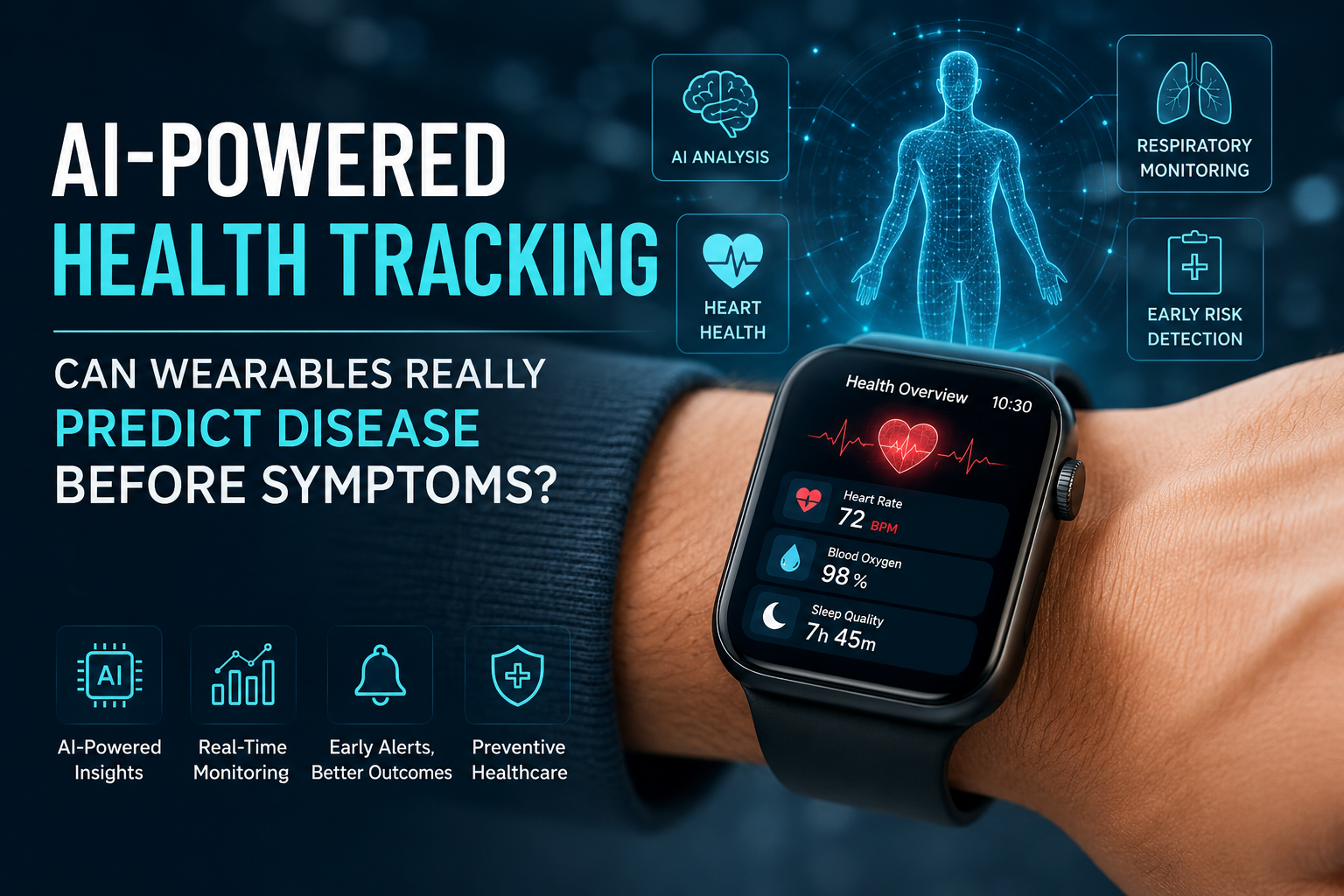
Healthcare technology is advancing at an incredible rate. Concepts that seemed like pure science fiction a few years ago are now turning into reality. Devices such as smart watches, fitness trackers, and rings are not restricted to merely counting steps and monitoring workouts anymore. Due to artificial intelligence, such devices are becoming health monitors that could potentially help diagnose health concerns before any symptoms are apparent.Is there actually a chance for wearables to detect any diseases before symptoms arise? Are these AI-powered health tracking devices dependable?
Let us discuss how AI and wearable technology are shaping the future of preventive healthcare.
What Are AI-Powered Health Tracking Devices?
The health-tracking device with the aid of artificial intelligence is a piece of wearable equipment that is designed to capture data from health-related areas and apply artificial intelligence technology in interpreting the results.
Examples include:
- Smartwatches
- Fitness bands
- Smart rings
- Continuous glucose monitors (CGMs)
- Smart patches and biosensors
These devices can track:
- Heart rate
- Blood oxygen levels
- Sleep quality
- Physical activity
- Stress levels
- Skin temperature
- Blood glucose levels
- Heart rhythm
AI algorithms process this information and look for trends that may signal health changes before a person feels unwell.
How AI-Powered Health Tracking Devices Work
It lies in the continuous tracking of data. Instead of most people meeting their physicians occasionally to receive a few seconds worth of insight into their health condition, wearables help to monitor data continuously.
Here is how it works:
1. Data Collection
Sensors embedded in the device gather physiological information throughout the day and night.
2. AI Analysis
Artificial intelligence analyzes thousands of data points to understand what is normal for a specific user.
3. Pattern Recognition
AI identifies unusual changes or trends that differ from the user’s baseline health patterns.
4. Health Alerts
In case any abnormalities occur, the device can alert the wearer to consult a doctor or undertake further testing.
The integration of these two technologies into one makes wearables much more advanced compared to conventional health monitoring techniques.
Can AI-Powered Health Tracking Devices Predict Disease Before Symptoms?
The strength of the wearable lies in its constant monitoring. As most individuals hardly ever visit a doctor and gain just an instant insight into their condition, wearables constantly monitor health data.
Here is how this is achieved:
Heart Disease Detection
The use of wearable technology in heart disease is considered one of the most promising areas.
All smart watches incorporate functionalities for tracking the heart rate and any abnormalities related to heart diseases like atrial fibrillation.
This enables the individual to avoid any complications arising due to heart diseases.
Infection Detection
Research has shown that changes in:
- Resting heart rate
- Skin temperature
- Sleep quality
- Respiratory rate
may appear before a person experiences symptoms of viral infections.
Some wearable devices have successfully identified physiological changes associated with illnesses several days before symptom onset.
Diabetes Monitoring
Continuous glucose monitors are allowing people to get more information on how their eating habits, exercising and living style impact their blood sugar levels.
AI can identify unusual trends in the glucose levels and offer suggestions based on them.
Sleep Disorders
Sleep-tracking wearables can identify patterns linked to:
- Sleep apnea
- Poor sleep quality
- Chronic fatigue
Since sleep problems often go unnoticed for years, wearable monitoring may encourage earlier diagnosis.
Stress and Mental Health Monitoring
Smart wearable devices have the ability to gauge the amount of stress through heart rate variability among other biometrics.
Although they cannot be used for diagnosing any psychological disorders, they might enable the user to detect patterns of chronic stress.
Benefits of AI-Powered Health Tracking Devices
Early Risk Detection
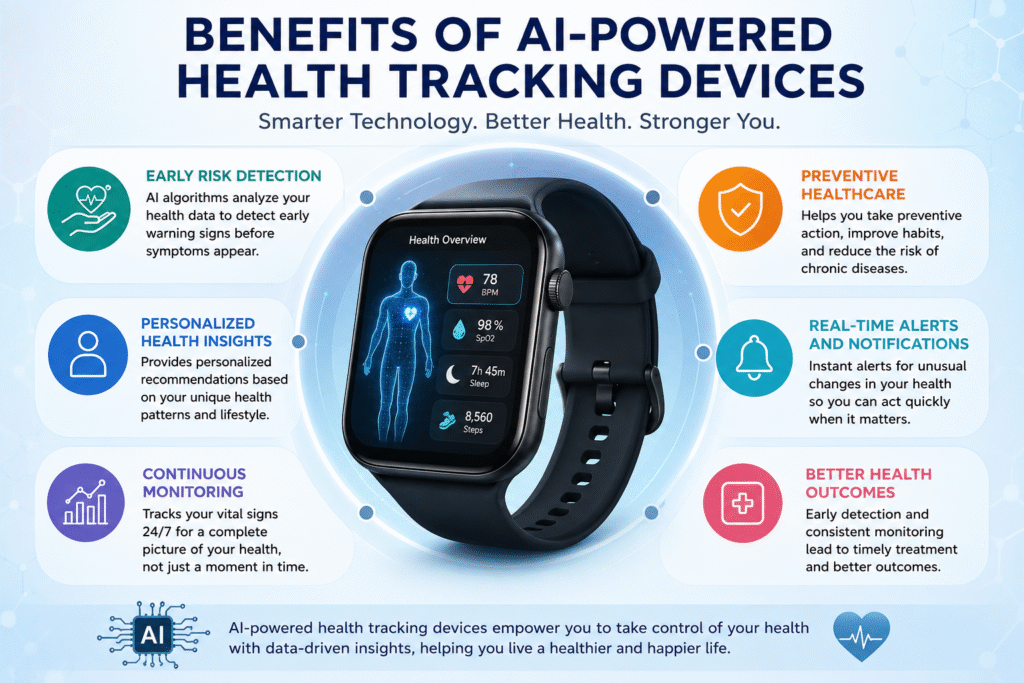
Among the many benefits that AI-based health tracking devices can offer us is their potential to detect early signs before any major symptoms show up.
Detecting early signs usually translates to a more prompt visit to the doctor.
Personalized Health Insights
AI learns individual patterns rather than relying solely on population averages.
This personalized approach can provide more meaningful health recommendations.
Continuous Monitoring
Unlike annual health checkups, wearable devices monitor health every day, creating a more complete picture of overall well-being.
Improved Health Awareness
Many users become more conscious of their:
- Physical activity
- Sleep habits
- Stress levels
- Heart health
This increased awareness often encourages healthier lifestyle choices.
Support for Preventive Healthcare
The field of preventive medicine is all about decreasing risks of disease. Wearable devices driven by artificial intelligence have great synergy with this concept.
Limitations of AI-Powered Health Tracking Devices
While wearable technology offers exciting possibilities, it is important to understand its limitations.
Not a Replacement for Medical Diagnosis
Alerts from a wearable device can be very informative, but not diagnostic.
A wearable device might recognize something odd without pinpointing its cause.
False Positives
Devices could be identifying some abnormalities without understanding the precise reason.
There are situations when wearables identify some anomalies that do not require serious attention.
The issuance of false positives creates fear and worry among users.
Accuracy Varies
Different devices use different sensors and algorithms.
Premium wearables generally provide more reliable data than lower-cost alternatives.
Privacy Concerns
Health data is extremely sensitive.
Privacy policies need to be read carefully and understood by consumers regarding their storage and sharing of personal health data.
Dependence on Consistent Use
Monitoring via wearables can only be successful through consistent use and proper data gathering.
The Future of AI-Powered Health Tracking Devices
The future of wearable healthcare looks incredibly promising.
Researchers are developing next-generation devices capable of monitoring:
Future AI systems can also analyze data from several sources to generate a more complete picture of one’s health, helping them detect any dangers at an even earlier stage.
There is a prediction that the importance of wearable devices for preventative medicine will only grow in the next 10 years.
Medical practitioners can potentially integrate data from wearables together with clinical information to deliver better healthcare services and prevent illnesses.
Who Should Consider Using AI-Powered Health Tracking Devices?
These devices may be particularly useful for:
Fitness Enthusiasts
Track workouts, recovery, and overall wellness.
Individuals with Chronic Conditions
Monitor important health metrics more consistently.
Older Adults
Keep track of heart health and other age-related concerns.
Busy Professionals
Manage stress, sleep, and lifestyle habits more effectively.
Health-Conscious Individuals
Gain deeper insights into daily health trends and preventive care.
Are AI-Powered Health Tracking Devices Worth It?For many people, the answer would be a yes.
Even though wearable technology cannot detect all possible diseases and take the place of any medical professionals, these devices provide many helpful insights on one’s health condition and wellbeing.
These include:
Identifying unusual patterns in your health
Encouraging healthy behaviors
Promoting preventive medicine
Raising awareness about your health
Thanks to improvements in artificial intelligence, wearables will only get better with time.
Conclusions
AI-based health monitoring technologies represent an important stage in the evolution towards the future of medicine being more preventive than reactive. Monitoring and interpreting health statistics with the help of sensors and AI shows one more way in which wearables can assist in our self-discovery.
Although these gadgets are unlikely to diagnose illnesses on their own, they could be very helpful as far as maintaining one’s good health in general goes. With wearable technology becoming more advanced each year, chances are there that AI health monitoring devices will become an important part of healthcare services in the future.
Medicine does not necessarily have to start at your doctor’s office; it might just start from your wrist.
Read the latest blog here
How to Improve Gut Health Naturally: 10 Simple Tips for Better Digestion and Better Health