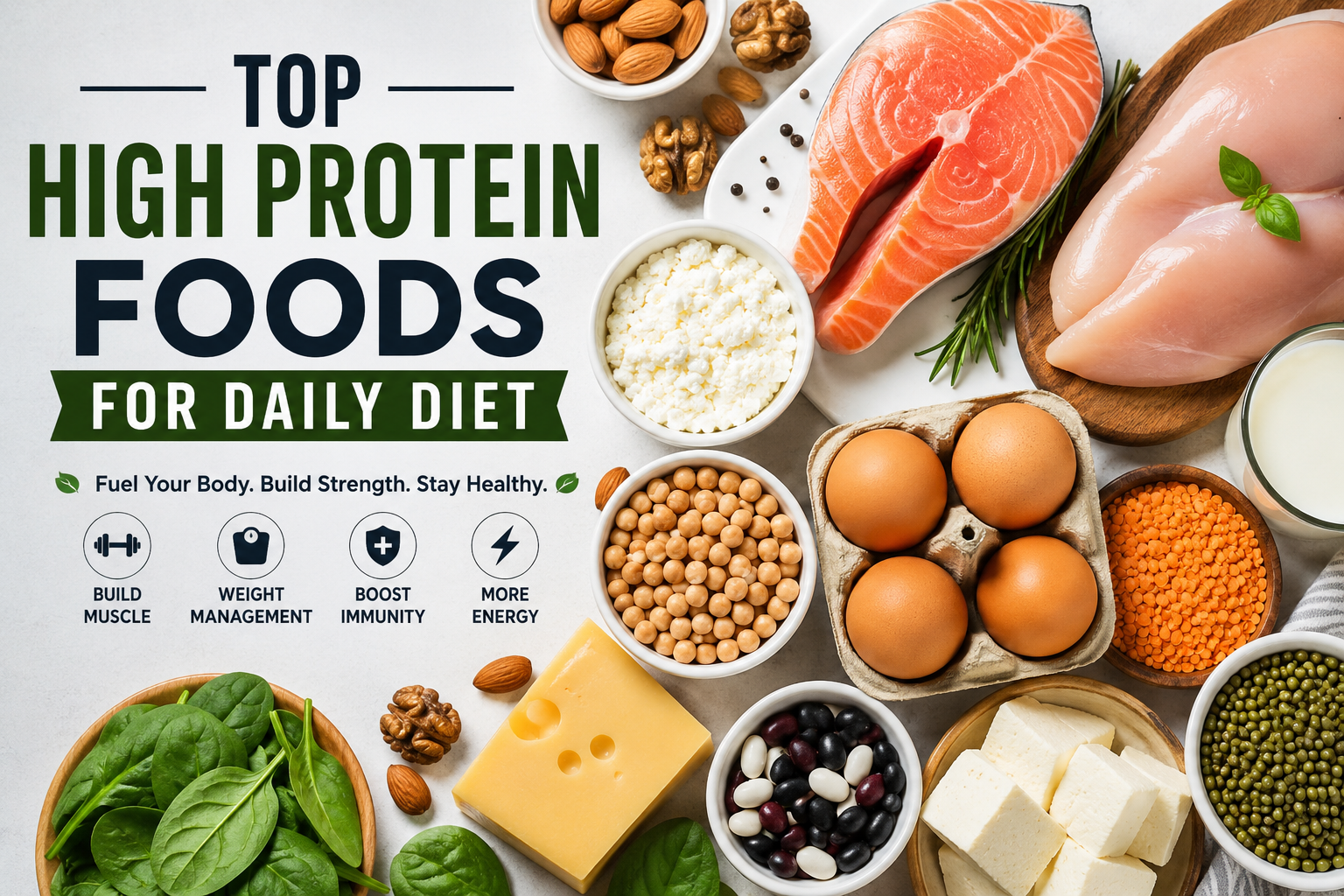
Proteins are essential macronutrients that our bodies require daily. They help in muscle building, repairing body tissues, boosting the immune system, and even satiety. If you want to either lose fat or gain muscle, incorporating high-protein food into your daily routine is crucial.In this article, we will discuss some of the best high protein foods for daily diet, their importance, and how they can be incorporated into your daily diet.
Why Are Proteins Important?
Proteins are often referred to as the body’s building blocks. This means that protein plays a major role in almost all bodily functions.
According to the Academy of Nutrition and Dietetics, an average adult should have a recommended daily intake of proteins depending on their age and physical activity level.
Protein is a vital macronutrient, and it is important that we eat it every day. Some of the roles played by protein in the body include muscle-building, body tissue repair, improving immunity, and providing a feeling of fullness. To gain muscles or lose weight, it is necessary to take foods that are high in protein.
- Promoting muscle formation
- Weight control
- Increasing satiety
- Boosting immunity
- Healthy skin, hair, and nails
- Repairing body tissues
Some of the benefits of proteins include:
In this article, we will look at some of the best high-protein foods for daily diets and how to incorporate them in our diets. We will also look at why protein is important.
1. Eggs
Eggs are among the most nutritious and affordable sources of protein. They contain all nine essential amino acids, making them a complete protein source.
Protein Content
- One large egg provides around 6–7 grams of protein.
Benefits
- Supports muscle growth and repair
- Helps keep you full for longer
- Rich in vitamins B12, D, and choline
- Easy to prepare and include in daily meals
How to Eat
- Egg curry
- Boiled eggs
- Omelets
- Scrambled eggs
- Egg sandwiches
- Chicken Breast
One of the most common sources of high-quality proteins, which is also popular among fitness lovers, is chicken breasts.
- Protein Content
- In 100 grams of cooked chicken breast, there are approximately 31 grams of proteins.
- Advantages
- Low-fat food source
- Perfect for building muscles
- Helpful for weight reduction
- Ways to consume
- Grilled chicken
- Chicken salads
- Chicken rolls
- Stir-fried chicken
3. Fish - Fish, which include salmon, tuna, and mackerel, provide a great source of protein along with omega-3 fatty acids.
- Protein Content
- A serving size of 100 grams of fish contains about 20-25 grams of protein.
- Benefits
- Boost heart health
- Enhance brain functions
- Anti-inflammatory properties
- Methods of Consumption
- Grilled fish
- Fish curry
Baked fish fillets
4. Greek Yogurt - It is packed with protein compared to ordinary yogurt and makes a great snack.
- Protein Content
- Contains about 15-20 grams of protein in one cup.
- Uses
- Promotes better digestion
- High levels of probiotics
- Helps stay full for long
- Ways of Consumption
- With fruits
- In smoothies
- Healthy desserts
5. Paneer - Paneer is considered one of the most excellent vegetarian protein sources in India.
- Amount of Protein
- There are approximately 18 to 20 grams of protein per 100 grams of paneer.
- Advantages
- Calcium-rich food
- Helps build muscles
- Vegetarian-friendly
- Serving Suggestions
- Paneer tikka
- Paneer bhurji
- Paneer curry
- Salads
6. Lentils (Dal)
Lentils form an important part of most Indian families’ diet and offer sufficient amounts of vegetarian protein. - Protein
- There is around 18 grams of protein in a cup of lentils that have been cooked.
- Advantages
- High in fiber content
- Promotes digestion
- Low-cost source of protein
- Ways of Consumption
- Dal Curry
- Lentil Soup
- Khichdi
7. Soybeans - Soybeans are counted among the finest vegetarian sources of protein.
- Protein Content
- There are 36 grams of protein in 100 grams of soybeans.
- Advantages
- Complete protein food source
- Suitable for vegetarians/vegans
- Heart-healthy
8. Cottage Cheese and Milk - Milk is an important source of protein together with calcium and other nutrients.
- Protein Content
- 1 glass of milk has about 8 grams of protein.
- Benefits
- Strengthens bones
- Helps muscles recover
- Easy to have daily
- How to Consume
- Milk
- Smoothies
- Protein shake
8. Almonds and Nuts - Nuts make great snacking options; they contain protein alongside healthy fat.
- Protein Content
- 28 grams of almonds contain around 6 grams of protein.
- Benefits
- Promotes heart health
- Boosts energy
- Contains antioxidants
- How to Consume
- As snacks
- In oatmeal
- Smoothies
9. Chickpeas - Chickpeas are highly nutritious pulses with high amounts of protein and can be easily used in vegetarian meals.
- Protein Content
- In one cup of boiled chickpeas, there is about 15 grams of protein.
- Advantages
- Provides plenty of fiber
- Good for reducing hunger
- Improves digestion
- Preparation Methods
- Chole
- In salads
- Roasted chickpea
How to Increase Protein in Your Diet Daily - In case you wish to increase your protein consumption, try these tips:
- Make sure that all your meals contain some form of protein.
- Start your day with foods like eggs, paneer, and yogurt.
- Eat healthy nuts and seeds instead of junk food for a snack.
- Incorporate lentils or beans into your soups and salads.
- Select protein-rich foods after exercise.
- Replace unhealthy snacks with those containing protein.
Who Should Be Consuming More Protein? - A higher protein intake would suit the following groups of people:
- Fitness buffs
- Those who are attempting to lose weight
- Senior citizens
- People suffering from some disease or injury
- Individuals wanting to gain muscles
Who Should Be Consuming More Protein? - A higher protein intake would suit the following groups of people:
- Fitness buffs
- Those who are attempting to lose weight
- Senior citizens
- People suffering from some disease or injury
- Individuals wanting to gain muscles
- It’s important not to forget a balanced diet regime and to follow medical advice.
Conclusion - Inclusion of high protein foods in the daily diet plan is probably the easiest way to enhance general fitness levels. The list of such foods includes eggs, chicken, fish, paneer, lentil, soybeans, Greek yogurt, and chickpeas.
- Incorporating such foods on a regular basis would not only help to build muscle mass but also maintain proper body weight. In addition, it helps in improving energy levels in your body. Therefore, start including such nutritious food in your diet from now onwards.
Read more blogs here
Summer diet plan for weight loss