typeEvery year, millions of people live with prediabetes and have no idea. According to the CDC, over 96 million American adults — that’s 1 in 3 — have prediabetes, and a staggering 80% don’t know it. The condition sits silently between normal blood sugar levels and full-blown Type 2 diabetes, and the window to act is wide open — if only you know what to look for.The good news? Prediabetes is reversible. With the right lifestyle changes, you can bring your blood sugar back to normal and prevent Type 2 diabetes entirely. But first, you need to spot the early warning signs of prediabetes before they progress.This comprehensive guide walks you through the prediabetes symptoms in adults, what causes it, how it’s diagnosed, and — most importantly — proven prevention tips to help you take control of your health right now.
96M+: US adults have prediabetes (CDC, 2024)
80%: don’t know they have it
10%: progress to Type 2 diabetes each year without intervention
58%: reduction in risk with lifestyle changes (DPP Study)
What Is Prediabetes? A Simple Explanation
Prediabetes is a metabolic condition where your blood glucose levels are higher than normal but not yet high enough to be classified as Type 2 diabetes. It indicates that your body’s cells are starting to resist insulin — the hormone that moves sugar from your bloodstream into your cells for energy.
Think of insulin resistance like a lock and key problem: insulin is the key, your cells’ receptors are the lock, and sugar is what gets let inside. In prediabetes, the lock starts to jam. Your pancreas compensates by pumping out more insulin, but over time it can’t keep up — and blood sugar rises.
⚠️ Important
Prediabetes often causes no noticeable symptoms in its early stages. Many people only discover it during a routine blood test. This makes regular screening crucial, especially if you have risk factors.
Understanding Prediabetes Blood Sugar Levels
Healthcare providers use three tests to diagnose prediabetes. Here’s what the numbers mean:
| Test | Normal | Prediabetes | Diabetes |
|---|---|---|---|
| Fasting Blood Sugar (FBG) | Below 100 mg/dL | 100–125 mg/dL | 126+ mg/dL |
| HbA1c (3-month average) | Below 5.7% | 5.7%–6.4% | 6.5%+ |
| Oral Glucose Tolerance Test (OGTT) | Below 140 mg/dL | 140–199 mg/dL | 200+ mg/dL |
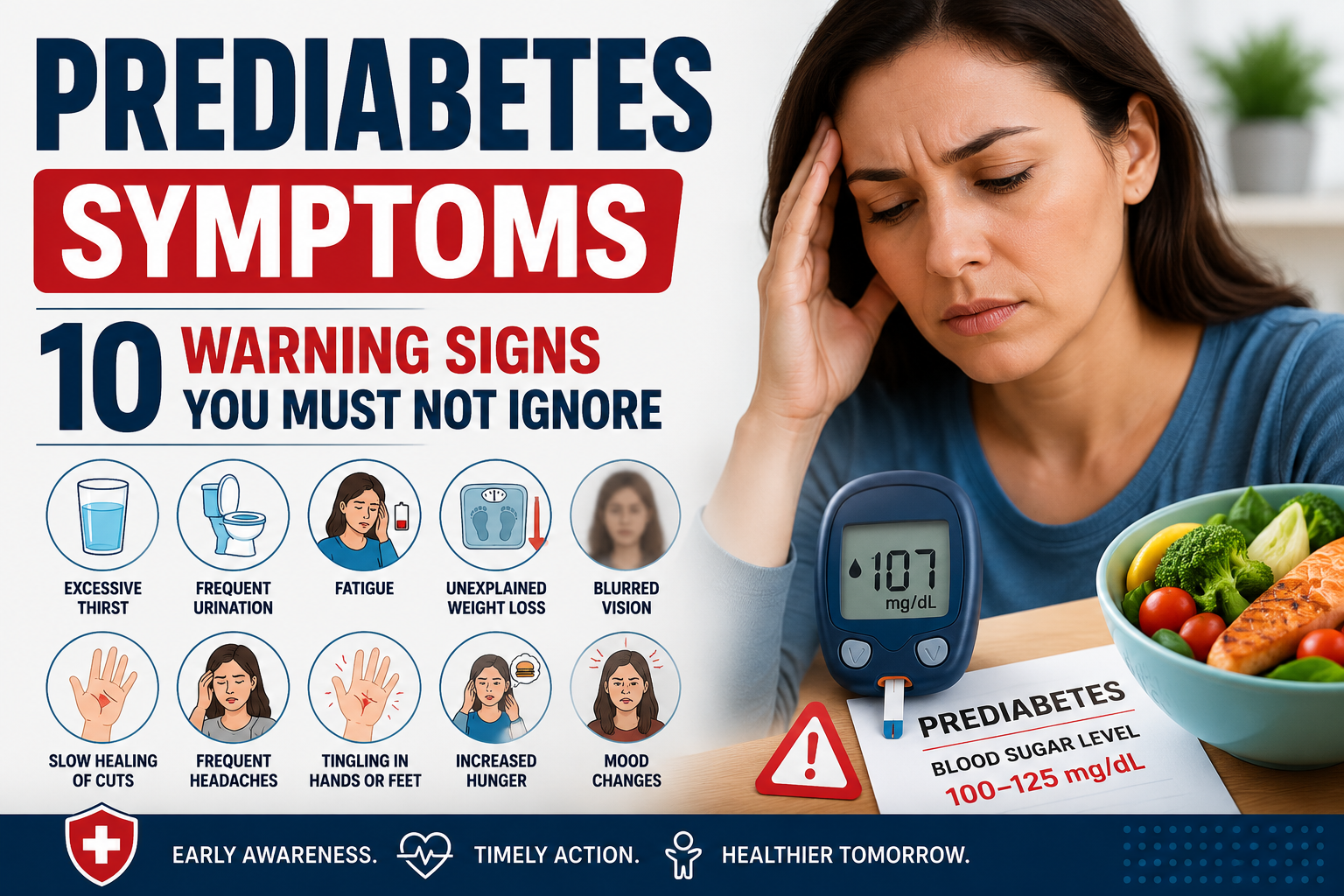
10 Early Warning Signs of Prediabetes in Adults
While many people with prediabetes are asymptomatic, some do experience subtle signs — especially as insulin resistance worsens. Here are the most important prediabetes warning signs and symptoms to watch for:
😴
1. Unusual Fatigue
Feeling tired even after a full night’s sleep? When cells can’t absorb glucose efficiently, your body lacks fuel — causing persistent, unexplained fatigue.
💧
2. Increased Thirst
Elevated blood sugar pulls fluids from tissues, triggering frequent thirst. You may feel dehydrated no matter how much water you drink.
🚽
3. Frequent Urination
Your kidneys work overtime to filter excess blood sugar. This leads to more trips to the bathroom, particularly at night (a condition called nocturia).
👁️
4. Blurry Vision
High blood sugar can cause the eye’s lens to swell, resulting in temporary blurry vision. This is one of the earliest physical signs of blood sugar issues.
🩹
5. Slow-Healing Cuts & Bruises
Elevated glucose impairs circulation and immune function, making wounds heal more slowly than they should. Watch for minor cuts or sores that linger for weeks.
🖤
6. Dark Skin Patches (Acanthosis Nigricans)
Dark, velvety patches appearing on the neck, armpits, or groin — called acanthosis nigricans — are a classic visible sign of insulin resistance.
🍔
7. Increased Hunger
When cells are insulin-resistant, they can’t absorb glucose properly. Your brain interprets this as starvation and triggers hunger signals — even right after eating.
🫀
8. Tingling or Numbness in Hands/Feet
Peripheral neuropathy can begin even in the prediabetes stage. Tingling, numbness, or a “pins and needles” sensation in extremities may be an early sign.
😤
9. Recurrent Infections
High blood sugar weakens the immune system. Frequent yeast infections, urinary tract infections, or skin infections can signal that something is off with blood sugar regulation.
⚖️
10. Unexplained Weight Gain (Especially Belly Fat)
Excess insulin promotes fat storage, particularly in the abdominal region. A growing waistline — even without dietary changes — is a red flag for insulin resistance.
💡 Quick Check
If you notice 3 or more of the above symptoms — especially alongside a family history of diabetes, obesity, or a sedentary lifestyle — consult your doctor for a blood sugar test immediately. Early detection is your greatest advantage.
Who Is at Risk for Prediabetes?
Knowing your risk factors is the first step toward prevention. You’re more likely to develop prediabetes if you have:
- 🍕Poor diet (high sugar, refined carbs)
- 🛋️Sedentary lifestyle
- ⚖️Overweight or obese (BMI ≥ 25)
- 🧬Family history of Type 2 diabetes
- 📅Age 45 or older
- 👶History of gestational diabetes
- 😴Sleep apnea or poor sleep
- 🩺Polycystic ovary syndrome (PCOS)
- 🏥High blood pressure or cholesterol
- 🌍African, Hispanic, Asian, or Pacific Islander descent
What Causes Prediabetes? The Root Factors Explained
Prediabetes doesn’t happen overnight. It develops when multiple factors combine over time to disrupt the body’s ability to regulate blood sugar:
Insulin Resistance
The core driver of prediabetes is insulin resistance — a state where your muscles, liver, and fat cells stop responding properly to insulin. Your pancreas compensates by producing more and more insulin until it can’t keep up. Blood sugar then begins to rise.
Poor Diet & Processed Food Intake
Diets high in refined carbohydrates, added sugars, sugary drinks, and ultra-processed foods spike blood sugar repeatedly and promote insulin resistance over time. The Western diet is a major contributor to the global prediabetes epidemic.
Physical Inactivity
Muscles are one of the body’s primary glucose-absorbing tissues. When you exercise, muscles absorb glucose even without insulin. A sedentary lifestyle dramatically reduces this mechanism and promotes fat accumulation — both key drivers of prediabetes.
Chronic Stress & Poor Sleep
Stress hormones like cortisol directly raise blood sugar levels and promote belly fat — a visceral fat pattern strongly linked to insulin resistance. Similarly, poor or disrupted sleep disrupts glucose metabolism and raises the risk of prediabetes.
7 Proven Prevention Tips: How to Reverse Prediabetes Naturally
The landmark Diabetes Prevention Program (DPP) — a large-scale NIH study — proved that intensive lifestyle intervention reduced the risk of progressing from prediabetes to Type 2 diabetes by 58%. Here’s how to replicate those results in your own life:
- 1Lose 5–7% of Your Body WeightEven modest weight loss makes a dramatic difference. For a 200-pound person, that’s just 10–14 pounds. Losing this amount significantly improves insulin sensitivity and can normalize blood sugar levels.
- 2Exercise at Least 150 Minutes Per WeekAim for moderate-intensity aerobic activity — brisk walking, cycling, swimming — spread across the week. Even short 10-minute walks after meals measurably reduce blood sugar spikes.
- 3Follow a Low-Glycemic, Whole-Food DietPrioritize vegetables, legumes, whole grains, lean proteins, and healthy fats. Limit white bread, white rice, sugary beverages, pastries, and ultra-processed snacks. The Mediterranean diet is especially well-studied for blood sugar control.
- 4Cut Out Sugary Drinks CompletelySodas, fruit juices, sports drinks, and sweetened teas are among the biggest dietary contributors to insulin resistance. Replace them with water, sparkling water, unsweetened green tea, or black coffee.
- 5Get 7–9 Hours of Quality SleepSleep deprivation impairs glucose metabolism and elevates cortisol. Prioritize consistent sleep schedules, a dark room, and limiting screen time before bed. If you snore heavily, get screened for sleep apnea.
- 6Manage Stress with Daily PracticesChronic stress raises cortisol, which directly raises blood sugar. Practice stress reduction techniques such as mindfulness meditation, yoga, deep breathing, journaling, or spending time in nature.
- 7Monitor Your Blood Sugar RegularlyIf you’ve been diagnosed with prediabetes, track your fasting blood sugar and HbA1c every 3–6 months. Home glucose monitors are widely available. Knowledge is power — seeing your numbers improve keeps you motivated.
✅ Good to Know
The CDC’s National Diabetes Prevention Program (National DPP) offers a year-long structured lifestyle change program available in clinics, online, and via apps — often covered by health insurance. Ask your doctor about enrollment if you’ve been diagnosed with prediabetes.
Best Foods to Eat (and Avoid) with Prediabetes
🟢 Foods to Eat
Non-starchy vegetables (spinach, broccoli, kale, cucumber), legumes (lentils, chickpeas, black beans), whole grains (oats, quinoa, barley), nuts and seeds, fatty fish (salmon, sardines), olive oil, berries (low in sugar, high in antioxidants), and plain Greek yogurt.
🔴 Foods to Limit or Avoid
foods;White bread and white rice, sugary breakfast cereals, flavored yogurts, candy and desserts, processed meats (hot dogs, deli meats); packaged snack foods, fried foods, and sugary drinks including fruit juice.
🚨 Watch Out For
“Diet” or “sugar-free” products often contain artificial sweeteners or hidden starches that still affect blood sugar and insulin response. Read nutrition labels carefully and focus on whole, minimally processed foods instead.
When to See a Doctor
See your doctor right away if you experience multiple symptoms from the list above, especially if you have risk factors. You should also get a routine blood sugar screening if you are:
Aged 35 or older (even without symptoms) · Overweight with additional risk factors · Pregnant or have a history of gestational diabetes · Living a sedentary lifestyle with poor dietary habits
Early detection through a simple fasting blood test or HbA1c test can make the difference between reversing prediabetes and developing lifelong Type 2 diabetes.
The Bottom Line
Prediabetes is not a life sentence — it’s a wake-up call. Millions of people have successfully reversed it through consistent lifestyle changes. The earlier you catch the signs, the better your chances of returning to healthy blood sugar for good.
Frequently Asked Questions
Can prediabetes be reversed without medication?
—withoutYes. For many people, prediabetes can be fully reversed through diet changes, regular exercise, weight loss, and better sleep — without any medication. The Diabetes Prevention Program showed a 58% reduction in progression rates through lifestyle alone.
How long does it take to reverse prediabetes?
With consistent lifestyle changes, many people see significant improvements in blood sugar within 3–6 months. Some return to normal blood sugar levels in as little as 6–12 months, depending on starting levels and adherence to changes.
What is the best diet for prediabetes?
A low-glycemic, whole-food diet rich in vegetables, lean proteins, healthy fats, and fiber is best. The Mediterranean diet and DASH diet are both well-supported by research for managing prediabetes and reducing cardiovascular risk.
Is prediabetes the same as insulin resistance?
Not exactly. Insulin resistance is one of the primary underlying mechanisms of prediabetes, but prediabetes is defined specifically by elevated blood sugar levels (measured by FBG, HbA1c, or OGTT). You can have insulin resistance without meeting the clinical criteria for prediabetes.
What are the early signs of prediabetes in women?
—aWomen may notice signs like increased fatigue, frequent urinary tract infections, dark skin patches (particularly around the neck and underarms), unexplained weight gain around the abdomen, and irregular periods due to PCOS — a condition closely linked to insulin resistance.
Medical Disclaimer: This article is for educational purposes only and does not constitute medical advice. Consult a qualified healthcare provider for diagnosis, treatment, or any health concerns.
Read the latest blog here
What’s the difference between PCOS and PCOD: Symptoms, Causes & Treatment Explained