Introduction
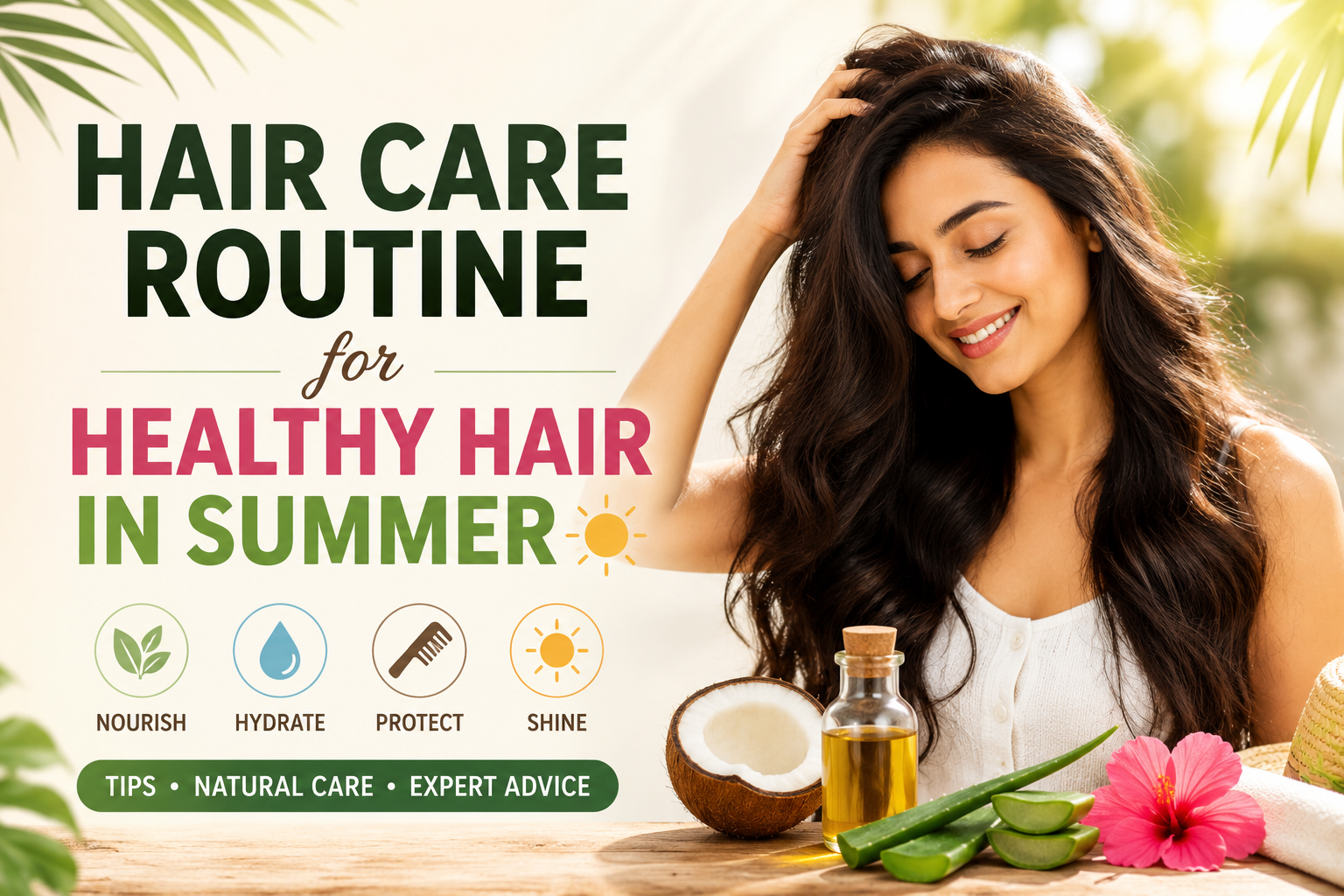
As soon as summer arrives, the first thing that takes a hit is our hair. Intense sunlight, heat, humidity, UV rays, and chlorine from swimming pools — all of these factors combine to make hair weak, dry, and lifeless. If every summer you find yourself staring at frizzy, broken, and dull hair, then what you truly need is a solid best hair care routine for healthy hair in summer at home.
This is a thorough guide that will help you learn all about the ways to take proper care of your hair in the summer season – without leaving your home, just by employing natural and easy-to-follow methods. From complete beginners to those who want to improve their existing techniques, this guide caters to all.
So let’s dive in — step by step, tip by tip!
What Happens to Hair in Summer?
Before building a routine, it is important to understand why hair suffers so much during the summer months.
1. UV Ray Damage
Just as UV rays tan and damage your skin, they also attack your hair cuticles. This makes hair look dry, brittle, and dull over time.
2. Excess Sweat and Scalp Issues
In the heat, your scalp produces more sweat than usual. This sweat disrupts the scalp’s natural pH balance, which can trigger dandruff, itching, and increased hair fall.
3. Hard Water and Chlorine
If you swim in pools or wash your hair with hard water, chlorine and mineral deposits build up on the hair shaft, causing significant damage and dryness.
4. Humidity and Frizz
In highly humid conditions, hair cuticles swell and open up, allowing moisture to escape and causing frizz to spiral out of control.
5. Dehydration
Your body loses more water in summer, and this dehydration affects the natural moisture levels of your scalp and hair as well.
All of these factors working together is exactly why following a targeted hair care routine during summer is not optional — it is essential.
Best Hair Care Routine for Healthy Hair in Summer at Home — Complete Step-by-Step Guide
Step 1: Scalp Cleansing — Choose the Right Shampoo
During summer, sweat, dust, and product buildup accumulate on the scalp much faster than in cooler months. That makes proper cleansing the very first and most critical step of your routine.
What to Do:
- Use a mild, sulfate-free shampoo that cleanses without over-drying the scalp.
- If you have oily hair, shampoo every 2–3 days.
- If you have dry hair, washing twice a week is sufficient.
- Always use lukewarm or cold water — hot water strips away the hair’s natural oils and leaves it even drier.
- Apply shampoo only to the scalp and roots, not directly to the length of your hair.
Recommended Ingredients to Look For:
- Aloe vera
- Tea tree oil (especially great for dandruff-prone scalps)
- Neem extract
- Bhringraj
What to Avoid:
- Shampoos loaded with sulfates (SLS/SLES)
- Daily shampooing unless your scalp is excessively oily
- Washing with hot water
Step 2: Deep Conditioning — Restore Lost Moisture
After shampooing, conditioning is the step that most people skip — but in summer, it is absolutely non-negotiable. Regular conditioning helps restore the moisture that heat and washing strip away.
Regular Conditioner vs. Deep Conditioner:
| Feature | Regular Conditioner | Deep Conditioner |
|---|---|---|
| Frequency | After every wash | 1–2 times per week |
| Time Left On | 2–3 minutes | 20–30 minutes |
| Penetration | Surface level | Penetrates the hair shaft |
| Main Benefit | Detangling and shine | Intense moisture and repair |
DIY Deep Conditioning Mask (Easy to Make at Home):
Banana + Honey + Coconut Oil Mask
- 1 ripe banana, well mashed
- 2 tablespoons honey
- 2 tablespoons coconut oil
- Mix all ingredients into a smooth paste and apply to hair for 30 minutes
- Rinse thoroughly with cool water
This mask is one of the best summer treatments for dry and damaged hair, providing intense hydration and softness.
Step 3: Hair Oiling — The Ancient Secret That Still Works
Hair oiling is a deeply rooted traditional Indian hair care practice — and science has now confirmed what our grandmothers always knew. Regular oiling nourishes the scalp, strengthens hair roots, and significantly reduces hair fall, especially during summer.
Best Oils for Summer:
1. Coconut Oil
- The most popular and effective oil for hair care
- Reduces protein loss from the hair shaft
- Has antimicrobial properties that protect against scalp infections
- How to use: Warm slightly and massage into scalp and hair length; rinse after 1–2 hours
2. Argan Oil
- Often called “Liquid Gold” for good reason
- Lightweight enough for oily scalp types
- Naturally provides UV protection
- How to use: Apply 2–3 drops to hair lengths as a leave-in treatment
3. Bhringraj Oil
- A powerful Ayurvedic hair growth tonic
- Highly effective in reducing hair fall
- Provides a cooling effect on the scalp — perfect for summer!
- How to use: Apply at night and wash off in the morning
4. Jojoba Oil
- Closely mimics the scalp’s natural sebum
- Helps balance sebum production on oily scalps
- How to use: Use for scalp massage sessions
5. Castor Oil
- Promotes thicker hair growth over time
- Thick and heavy in consistency — best applied at night
- How to use: Mix with bhringraj or coconut oil to make it easier to apply
Pro Oiling Tips:
- Towel-dry hair slightly before oiling for better absorption
- Massage in circular motions to improve blood circulation to the scalp
- Leave on for a minimum of 1 hour; overnight application gives the best results
- Wear a plastic shower cap after oiling to trap heat and enhance absorption
Step 4: Sun Protection for Hair — Shield It from UV Damage
People are now diligent about applying SPF to their skin — but most completely forget that hair needs UV protection too. Neglecting this in summer is one of the biggest mistakes you can make.
How to Protect Your Hair:
UV Protection Products:
- Hair sunscreen sprays are widely available — apply before stepping outdoors
- Leave-in conditioners with built-in UV filters are excellent
- Argan oil naturally provides a layer of UV protection
Protective Styling:
- Wear braids or buns when going outside — loose styles expose hair more to the sun
- Use a scarf, hat, or cap — it is both fashionable and protective
DIY UV Protection Spray:
- 1 cup aloe vera juice
- 1 tablespoon argan oil
- 5 drops lavender essential oil
- Combine in a spray bottle and shake well
- Spritz onto hair before going outdoors
Step 5: Scalp Care — A Healthy Scalp Means Healthy Hair
Many people focus entirely on their hair strands while completely ignoring the scalp — but all healthy hair begins at the roots. A neglected scalp in summer can lead to a host of problems.
Common Summer Scalp Problems and Solutions:
Dandruff:
- Switch to a tea tree oil shampoo
- Try a diluted apple cider vinegar rinse after shampooing
- Anti-dandruff treatment: mix 2 tablespoons coconut oil with 5 drops tea tree oil and massage into the scalp 30 minutes before washing
Itchy Scalp:
- Apply fresh aloe vera gel directly to the scalp
- Rinse hair with neem water (boil neem leaves in water, let cool, and use as a final rinse)
- Reduce washing frequency if you are over-washing
Oily Scalp:
- Use a dry shampoo between wash days
- Apply a clay-based scalp mask once a week
- Massage with jojoba oil — it signals the scalp to produce less sebum
Scalp Exfoliation (Once a Week):
- Mix 2 tablespoons sugar with 1 tablespoon coconut oil
- Gently scrub the scalp in circular motions for 2–3 minutes
- This removes dead skin cells and product buildup
- Follow with your regular shampoo
Step 6: Hydration From Within — Nourish Your Hair from the Inside Out
Here is a truth that cannot be overstated — what you eat and drink shows up directly in the quality of your hair. Internal hydration is just as important as any external treatment during summer.
Drink More Water:
- Aim for at least 8–10 glasses of water every day
- Dehydration makes hair brittle, dull, and more prone to breakage
- Coconut water, lemon water, and buttermilk are all excellent hydrating options
Hair-Friendly Foods for Summer:
| Food | Benefit |
|---|---|
| Eggs | Protein and biotin — essential for hair growth |
| Spinach | Iron and folate — helps prevent hair fall |
| Walnuts | Omega-3 fatty acids — adds shine and strength |
| Berries | Vitamin C — supports collagen production |
| Sweet Potato | Beta-carotene — promotes scalp health |
| Amla (Indian Gooseberry) | Vitamin C powerhouse — boosts hair growth |
| Lentils (Dal) | Protein, iron, and zinc — complete hair nutrition |
| Cucumber | Silica — strengthens hair structure |
Supplements (Consult Your Doctor First):
- Biotin (Vitamin B7)
- Vitamin D
- Iron
- Omega-3 fatty acids
Step 7: Reduce Heat Styling — Don’t Add More Heat to an Already Hot Season
Your hair is already battling heat and humidity from the environment. Reaching for a flat iron or blow dryer on top of that is essentially double damage.
Best Practices:
- Minimize heat tool usage during summer — let your hair air dry whenever possible
- If you must use heat tools, always apply a heat protectant spray first
- Keep temperature settings at or below 180°C
- Use the cool setting on your blow dryer
Stylish No-Heat Hairstyles for Summer:
- Air-dried wavy or textured look
- Overnight braids for effortless waves in the morning
- Buns and updos — elegant and protective
- Scrunchie ponytails (avoid tight rubber elastic bands as they cause breakage)
Step 8: Regular Trimming — Get Rid of Split Ends
Dry and heat-damaged hair develops split ends far more quickly during summer. If left untrimmed, these split ends travel up the hair shaft and cause even more damage.
- Trim every 6–8 weeks during summer
- Trimming does not slow down hair growth — it actually promotes healthier growth
- Even a small dusting trim can make a visible difference in hair health
Step 9: Nighttime Hair Care — Your Hair Heals While You Sleep
The 7–8 hours you spend sleeping each night is prime healing and repair time for your hair. Most people completely overlook their nighttime routine — and that is a missed opportunity.
Nighttime Routine Essentials:
- Never tie your hair tightly with a rubber band at night — it causes breakage along the hairline
- Switch to a silk or satin pillowcase — cotton creates friction and worsens frizz and breakage
- Sleep with your hair in a loose braid or a loose bun
- Wear a shower cap if you have applied oil overnight
- Apply a leave-in conditioner or hair serum to the ends before sleeping
DIY Overnight Hair Mask:
- 2 tablespoons plain yogurt
- 1 tablespoon honey
- 1 teaspoon olive oil
- Mix together, apply to hair, cover with a shower cap
- Wash out with regular shampoo in the morning
Special Summer Hair Problems and Their Solutions
1. Frizzy Hair in Humidity
Frizz is arguably the most unwelcome gift that summer humidity brings along.
Solutions:
- Use an anti-frizz serum or oil after washing — argan oil is the gold standard
- Deep condition regularly to keep hair cuticles smooth and sealed
- Detangle with a wide-tooth comb, not a brush
- Use a microfiber towel to dry hair — cotton towels rough up the cuticle and worsen frizz
- Finish styling with a gel or mousse to hold the shape and fight humidity
Quick Frizz Fix: Warm 2 drops of argan oil between your palms and gently press onto your hair — works instantly.
2. Hair Fall in Summer
Increased hair fall is one of the most common summer complaints, and it worries a lot of people.
Why It Happens:
- Seasonal shedding (a condition called telogen effluvium) is normal to a certain extent
- Scalp irritation from excess sweat
- Nutritional deficiencies that worsen in the heat
- Elevated stress levels
Solutions:
- Regular scalp massages with bhringraj or castor oil
- Increase protein intake through diet
- Handle wet hair gently — never aggressively comb or brush soaking wet hair
- Onion juice therapy (twice a week): extract juice from a fresh onion, apply directly to the scalp, leave for 30 minutes, then wash out
3. Dry and Brittle Hair
Solutions:
- Use shea butter-based products for intense moisturization
- Weekly protein treatments using eggs, bananas, or mayonnaise masks
- Include humectants in your routine — glycerin and aloe vera draw moisture into the hair
- Stay completely away from hot water when washing
4. Post-Swimming Hair Care
Chlorine from swimming pools is one of the most damaging substances for hair during summer.
Before Swimming:
- Wet your hair thoroughly with plain water before entering the pool — pre-saturated hair absorbs less chlorine
- Apply a layer of coconut oil as a protective coating
- Wear a swimming cap for maximum protection
After Swimming:
- Wash your hair immediately with a clarifying shampoo
- Follow up with a deep conditioner
- Apply a leave-in conditioner to restore moisture
Weekly Summer Hair Care Schedule — Your Complete Routine Planner
Here is a practical weekly schedule you can start following today:
| Day | Activity |
|---|---|
| Monday | Shampoo and condition; lightweight scalp massage with argan or jojoba oil |
| Tuesday | Apply leave-in conditioner; style in a protective hairstyle |
| Wednesday | Mid-week scalp check — use dry shampoo at roots if needed |
| Thursday | Deep conditioning mask (leave on for 30 minutes) |
| Friday | Overnight oiling — bhringraj or coconut oil applied before bed |
| Saturday | Clarifying shampoo wash with scalp exfoliation scrub |
| Sunday | Rest day — let hair breathe in its natural state, apply a light serum to ends |
Top 10 Summer Hair Care Mistakes You Are Probably Making
- Washing with hot water every day — hot water strips protective oils; switch to lukewarm or cold water
- Skipping conditioner on the scalp — while the focus is on lengths and ends, the roots also benefit from conditioning
- Tying wet hair in a tight ponytail — wet hair is extremely fragile and prone to breakage under tension
- Over-washing your hair — washing too frequently strips away the natural oils your scalp needs
- Applying sunscreen to skin but forgetting hair — UV rays damage hair just as much as skin
- Using cheap rubber elastic bands — replace them with satin scrunchies or spiral hair ties to minimize breakage
- Overdoing protein treatments — too much protein causes brittleness; balance protein treatments with moisture treatments
- Not washing hair immediately after swimming — chlorine continues to damage hair the longer it sits; rinse out immediately
- Aggressively rubbing hair with a towel — gently squeeze water out with a microfiber towel instead
- Sleeping with hair loose on a cotton pillowcase — this causes friction, frizz, and breakage overnight; a silk pillowcase or loose braid is far better
Natural DIY Recipes for Summer Hair Care
Recipe 1: Cooling Aloe Vera Scalp Treatment
Ingredients:
- 4 tablespoons fresh aloe vera gel
- 2 tablespoons rose water
- 5 drops peppermint essential oil
Method:
- Mix all three ingredients together until well combined
- Apply generously to the scalp
- Leave on for 20–30 minutes
- Rinse out with your regular shampoo
Benefits: Deeply cools the scalp, controls dandruff, soothes itching and irritation
Recipe 2: Egg and Yogurt Protein Mask
Ingredients:
- 1 whole egg
- 3 tablespoons plain yogurt
- 1 tablespoon honey
Method:
- Beat all ingredients together until smooth
- Apply from roots to ends, making sure every strand is coated
- Cover with a plastic cap
- Rinse out after 30 minutes using cold water — warm or hot water will cook the egg!
Benefits: Repairs protein loss, restores shine, leaves hair noticeably softer
Recipe 3: Amla + Shikakai + Reetha Natural Shampoo
Ingredients:
- 2 tablespoons amla powder
- 2 tablespoons shikakai powder
- 1 tablespoon reetha powder
- 1 cup warm water
Method:
- Soak all powders in warm water overnight
- Strain the mixture through a cloth or fine strainer in the morning
- Apply the liquid to hair and massage gently into the scalp
- Rinse thoroughly with plain water
Benefits: Completely chemical-free cleansing, promotes hair growth, adds natural shine
Recipe 4: Fenugreek (Methi) and Coconut Milk Hair Mask
Ingredients:
- 3 tablespoons fenugreek seeds (soaked overnight)
- 4 tablespoons coconut milk
- 1 tablespoon lemon juice
Method:
- Grind the soaked fenugreek seeds into a smooth paste
- Mix in coconut milk and lemon juice
- Apply to hair from roots to tips and leave on for 45 minutes
- Rinse out with a mild shampoo
Benefits: Reduces hair fall, improves scalp health, treats dandruff naturally
Summer Hair Care Routine by Hair Type
For Oily Hair
- Use a lightweight, clarifying shampoo — wash 3 times per week
- Use an oil-free or light conditioner on ends only
- Apply a clay-based scalp mask once a week to absorb excess sebum
- Use dry shampoo between wash days to keep roots fresh
- Avoid heavy oils like castor or coconut — opt for jojoba or argan oil instead
For Dry Hair
- Choose a moisturizing, sulfate-free shampoo — wash twice a week
- Use a rich, creamy conditioner after every wash
- Deep condition with a nourishing mask twice a week
- Oil regularly with coconut or castor oil
- Use a leave-in conditioner every day
- Include humectants like shea butter and glycerin in your routine
For Curly and Wavy Hair
- Try co-washing (washing with conditioner only, skipping shampoo) on some days
- Use a curl-defining cream or styling gel to define your pattern
- Use a diffuser attachment instead of direct heat styling
- Anti-humidity sprays and products are essential for this hair type
- Use the pineapple technique at night (gather curls loosely on top of the head) to preserve curl shape
For Color-Treated Hair
- Always use color-safe shampoo and conditioner — regular formulas strip color faster
- Apply UV protection products before going outside to preserve color vibrancy
- Deep condition every week without fail
- Be extra careful around chlorine — a swimming cap is a must
- Use a purple or blue toning shampoo (for blonde or silver hair) to neutralize brassiness caused by sun exposure
Budget-Friendly vs. Premium Summer Hair Care Products
Budget Options (Under ₹500):
- Parachute Coconut Oil — ₹100–150
- Patanjali Kesh Kanti Shampoo — ₹100
- Biotique Bio Kelp Protein Shampoo — ₹200–250
- Dabur Vatika Hair Oil — ₹150–200
- WOW Onion Black Seed Hair Oil — ₹300–400
Mid-Range Options (₹500–₹1,500):
- Mamaearth Onion Hair Oil — ₹500–600
- Pilgrim Bhringraj Hair Oil — ₹600–700
- SoulTree Shikakai Shampoo — ₹400–500
- The Moms Co Natural Protein Shampoo — ₹500–600
- Arata Zero Chemicals Conditioner — ₹500–600
Premium Options (₹1,500+):
- Kérastase Nutritive Range
- Moroccanoil Treatment
- Olaplex No. 3 Hair Perfector
- Briogeo Don’t Despair, Repair! Deep Conditioning Mask
- Living Proof Perfect Hair Day Dry Shampoo
Expert Tips — What Dermatologists and Trichologists Recommend
According to hair and scalp experts, these are the most important points to keep in mind for summer hair care:
1. Scalp Sunburn Is a Real Thing Very few people realize that the scalp can actually get sunburned — especially along the parting and hairline. Change your parting regularly or wear a head covering when spending extended time outdoors.
2. Always Finish With a Cold Water Rinse End every hair wash with a cold water rinse. Cold water seals the hair cuticles, locks in moisture, and adds a noticeable boost of shine.
3. Protein-Moisture Balance Is Critical Using only moisturizing products or only protein products will both cause problems. Balance is the key. If your hair feels stretchy, mushy, and limp — it needs protein. If it feels stiff, dry, and snaps easily — it needs moisture.
4. Stress Management Matters More Than You Think Cortisol, the stress hormone, directly disrupts the hair growth cycle. Practices like meditation, yoga, and getting enough sleep are not just good for your mind — they genuinely benefit your hair too.
5. Tight Hairstyles Can Damage Your Hairline Wearing tight hairstyles consistently can lead to traction alopecia, a form of gradual hair loss along the hairline and temples. During summer, opt for loose, gentle styles whenever possible.
Frequently Asked Questions (FAQs)
Q1: How often should I wash my hair in summer? A: It depends on your scalp type. Oily scalp — every 2–3 days. Normal scalp — 2–3 times per week. Dry scalp — once or twice a week. Over-washing strips away your scalp’s natural protective oils and often makes oiliness worse in the long run.
Q2: Should I still oil my hair in summer? A: Absolutely. However, opt for lightweight oils during the warmer months, such as argan oil or jojoba oil. Heavier oils like bhringraj or coconut oil are best applied at night and washed out the next morning. Avoid going outdoors with oil in your hair — it attracts dust and pollution.
Q3: Is spending a lot of time in air conditioning bad for hair? A: Yes, air-conditioned environments have very dry air that pulls moisture from hair. Combat this by applying a leave-in conditioner or a few drops of light hair oil while indoors. Using a humidifier in your room can also help significantly.
Q4: How can I do a protein treatment at home? A: An egg mask is the most effective and affordable option. Mix 1 egg, 1 tablespoon olive oil, and 1 tablespoon honey. Apply to hair for 30 minutes and rinse out with cold water. Once a week is sufficient — doing it more often can lead to protein overload.
Q5: Should I get my hair trimmed during summer? A: Yes, without question. Get a trim every 6–8 weeks during summer. Split ends are more common in this season, and if not cut, the damage travels up the hair shaft, ultimately requiring a much larger cut later.
Q6: Can I apply aloe vera directly to my hair? A: Yes! Fresh aloe vera gel is excellent for both the scalp and hair strands. It can be used as a leave-in conditioner, as a scalp treatment before oiling, or as a cooling gel on an irritated scalp. It is one of the most versatile natural hair care ingredients available.
Q7: What is the best hairstyle for hair health in summer? A: Protective hairstyles such as braids, buns, twists, and chignons are ideal. They shield your hair from UV rays and humidity, reduce tangles, and minimize breakage caused by environmental exposure.
Q8: What is the difference between hair serum and hair oil? A: Hair oil nourishes the hair from within — it penetrates the shaft to deliver moisture and nutrients. Hair serum works on the surface — it controls frizz, adds shine, and creates a protective coating. Both have different roles and can absolutely be used together as part of a complete routine.
Conclusion — Give Your Hair Its Best Summer Ever
It is clear that summer hair care goes far beyond reaching for a bottle of shampoo. A proper hair care routine for healthy hair in summer encompasses everything from the right cleansing technique and deep conditioning to oiling, sun protection, scalp care, proper nutrition, and even how you sleep at night.
But do not feel overwhelmed — you do not need to implement everything at once. Start with just 2–3 steps:
- Choose the right shampoo for your hair type
- Begin a regular deep conditioning practice
- Add an oiling routine
Then gradually layer in the remaining steps as they become habits. Consistency is far more powerful than perfection.
Remember: Healthy hair is a journey, not a destination. You will not see dramatic results overnight — but with 4–6 weeks of consistent effort, you will feel and see a real, meaningful difference.
This summer, give your hair the care it deserves. And if you found this guide helpful, share it with your friends and family who could use a summer hair care reset!
Keywords: best hair care routine for healthy hair in summer at home, summer hair care tips, summer hair fall solution, how to protect hair from sun damage, deep conditioning for summer hair, natural hair care routine for summer, oily scalp treatment in summer, DIY hair mask for summer, hair care tips for hot weather, healthy hair routine summer 2025
Disclaimer: This article is intended for general informational purposes only. If you are experiencing severe hair fall, persistent scalp infections, or any other serious hair or scalp condition, please consult a qualified dermatologist or trichologist.
Read the latest blog here
Walking Yoga: The Trending Workout You Can Do Anywhere (No Mat Needed)