If it feels like every other woman in her twenties or thirties is talking about her thyroid these days, you’re not imagining it. Social media is full of stories about sudden weight changes, exhaustion that doesn’t go away with sleep, hair thinning out of nowhere, and a diagnosis that finally explains it all: a thyroid disorder. In 2026, thyroid problems in young women are being discussed more openly than ever, and a growing number of women in their reproductive years are being told they have an underactive thyroid, an overactive thyroid, thyroid nodules, or an autoimmune thyroid condition.So what’s really going on? Is this a true rise in disease, better awareness and testing, or a combination of both? This article breaks down the most likely causes of thyroid problems in young women worth paying attention to, and what young women can do to protect their thyroid health.
Is the Rise in Thyroid Problems Real, or Are We Just Noticing It More?
Thyroid conditions have always disproportionately affected women. Thyroid disorders are roughly ten times more common in women than men, and autoimmune thyroid disease in particular tends to cluster in women during their reproductive years. What has changed is the visibility of these numbers. Routine blood panels now screen thyroid-stimulating hormone (TSH) far more often than they did a decade or two ago, primary care doctors are quicker to test for thyroid issues when a young woman reports fatigue or irregular periods, and ultrasound technology has gotten so sensitive that it can pick up tiny thyroid nodules that would have gone unnoticed in the past.
Research on thyroid cancer specifically supports this idea. Diagnoses among adolescents and young adults, especially young women, have climbed sharply over the past two decades, but global health researchers point to earlier detection and more sensitive imaging as the primary driver rather than a true explosion in new disease. In other words, part of the “epidemic” is really an “early-detection” story.
That said, better detection doesn’t fully explain everything. There are also genuine biological and lifestyle reasons why young women’s thyroids appear to be under more strain than before.
Top Reasons More Young Women Are Developing Thyroid Problems
1. Autoimmune Conditions Are Climbing
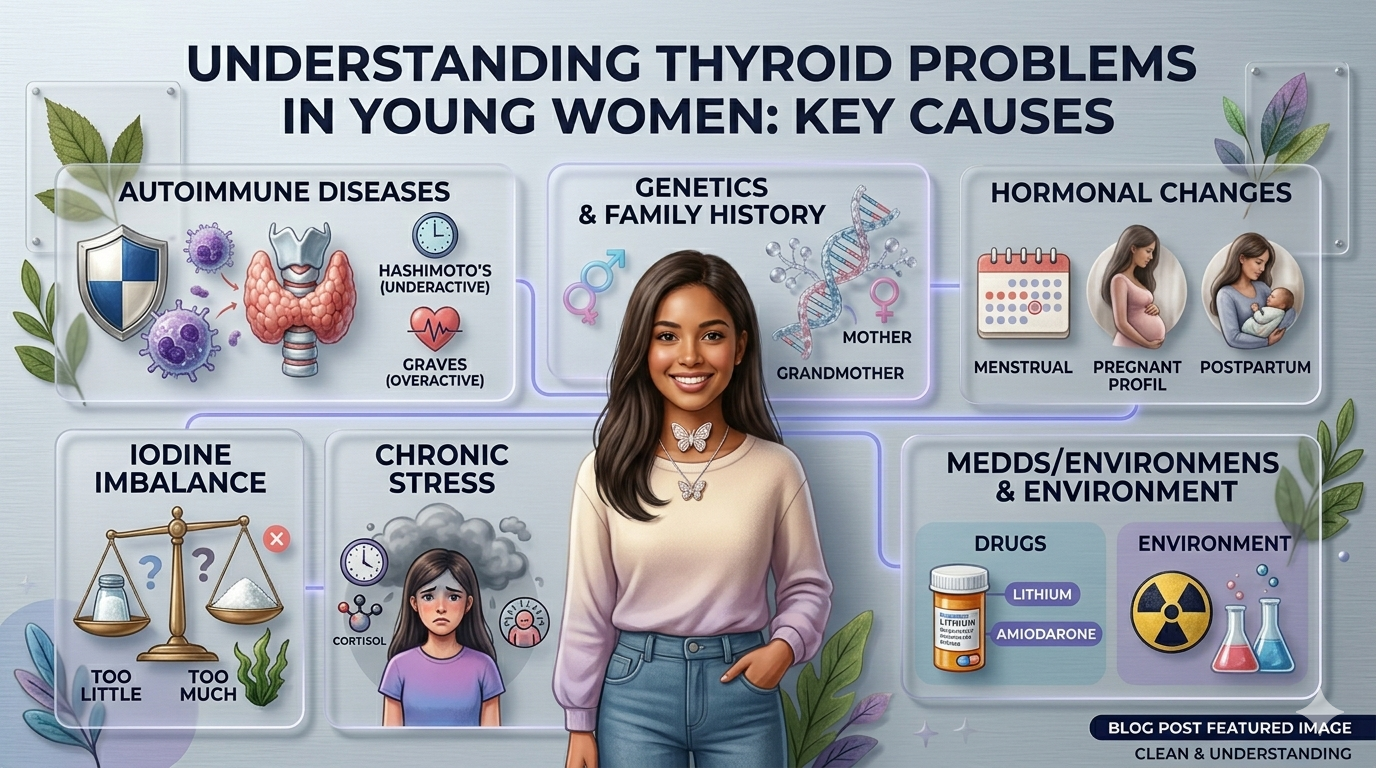
The majority of thyroid problems in women living in countries with adequate iodine intake, including the U.S., trace back to autoimmune disease rather than iodine deficiency. Hashimoto’s thyroiditis, where the immune system gradually attacks the thyroid gland, is the most common autoimmune disorder overall, and it shows up far more often in women than men. Autoimmune conditions in general have been rising across many populations, and researchers studying autoimmune thyroiditis point to a mix of genetic predisposition combined with environmental triggers, rather than genetics alone, as the reason cases keep increasing.
2. The PCOS Connection
One of the more underappreciated links is between polycystic ovary syndrome (PCOS) and thyroid disease. Multiple studies have found that women with PCOS are significantly more likely to also have Hashimoto’s thyroiditis than women without PCOS, with some research showing the rate of Hashimoto’s in PCOS patients running four times higher than in the general female population. Since PCOS itself has become more commonly diagnosed in young women, the overlap means more women are discovering thyroid dysfunction alongside their PCOS workup, often during their teens or twenties when both conditions tend to first appear.
3. Chronic Stress and Oxidative Stress
Long-term psychological stress doesn’t just feel exhausting, it has measurable effects on the immune system. Researchers studying the biology behind autoimmune thyroid disease and PCOS have found that prolonged stress triggers inflammatory pathways and oxidative stress that can contribute to the immune system turning on the thyroid gland. Young women juggling demanding careers, financial pressure, social media comparison, and disrupted sleep cycles are living through exactly the kind of sustained stress load that this research links to autoimmune flare-ups.
4. Environmental and Dietary Triggers
Beyond genetics, a growing body of research has examined environmental exposures as contributors to autoimmune thyroiditis. Factors that have been studied include certain chemical exposures, smoking, excess iodine intake from supplements or fortified foods, selenium deficiency, and disruptions to gut bacteria. None of these factors act alone, but together they may explain why a genetically susceptible person develops an active thyroid disorder rather than just carrying the antibodies silently for years.
5. Reproductive Hormone Shifts
The thyroid and the reproductive system are closely linked through shared hormonal pathways. Puberty, menstrual cycle changes, pregnancy, and postpartum recovery all place extra demand on the thyroid gland. Postpartum thyroiditis, for example, can appear in the months after childbirth and sometimes gets mistaken for ordinary new-parent exhaustion. Because more women are also delaying childbirth or experiencing fertility-related hormonal investigations, thyroid testing during these life stages catches problems that might otherwise have been missed.
6. Better Awareness Means Earlier Self-Reporting
It’s worth saying plainly: more young women now know what thyroid symptoms look like. A decade of health content online has made words like “Hashimoto’s,” “hypothyroid,” and “TSH levels” part of everyday vocabulary. Women are walking into doctor’s appointments and specifically requesting thyroid panels instead of accepting vague explanations like stress or normal weight fluctuation. This shift in health literacy is genuinely a good thing, even if it makes the condition look more “common” than it did when fewer people asked the right questions.
Symptoms Young Women Should Not Ignore
Thyroid symptoms are notoriously easy to mistake for everyday tiredness, anxiety, or hormonal shifts. Some of the most common signs include persistent fatigue that doesn’t improve with rest, unexplained weight gain or loss, irregular or heavy periods, hair thinning or hair loss, feeling unusually cold or overheated compared to others in the room, dry skin, brain fog or difficulty concentrating, and a noticeable swelling or lump at the front of the neck. Mood changes, including new anxiety or depression-like symptoms, can also be linked to thyroid hormone imbalance, which is part of why the condition gets missed or misattributed for so long.
When to See a Doctor
If several of these symptoms have lasted more than a few weeks, it’s reasonable to ask a doctor for a thyroid panel, which typically starts with a TSH blood test and may be followed by free T4, free T3, and thyroid antibody testing if results are abnormal. Women with a family history of thyroid disease, a personal or family history of autoimmune conditions, PCOS, or recent pregnancy should mention this directly, since it can change how quickly a doctor decides to test.
Supporting Thyroid Health
While not every thyroid condition can be prevented, especially ones rooted in genetics, there are habits that support overall thyroid and immune function. These include eating a balanced diet with adequate but not excessive iodine and selenium, prioritizing consistent sleep, finding sustainable ways to manage chronic stress, avoiding smoking, and getting recommended health screenings rather than waiting for symptoms to become severe. For women already diagnosed, sticking with prescribed medication and follow-up bloodwork is the most reliable way to keep hormone levels stable.
The Bottom Line
The rise in thyroid problems among young women in 2026 is best explained as a combination of real biological factors, like autoimmune disease, PCOS overlap, and chronic stress, layered on top of genuinely better detection and health awareness than previous generations had. Neither explanation cancels the other out. What matters most for any individual woman is recognizing her own symptoms early, asking for the right tests, and getting consistent follow-up care rather than dismissing fatigue or weight changes as “just stress” or “just life.”
This article is for general informational purposes and is not a substitute for professional medical advice. If you’re experiencing symptoms of a thyroid disorder, please consult a licensed healthcare provider for proper testing and diagnosis.
Read the latest blog here
What are the 10 best probiotic foods for gut health in summer that improve digestion